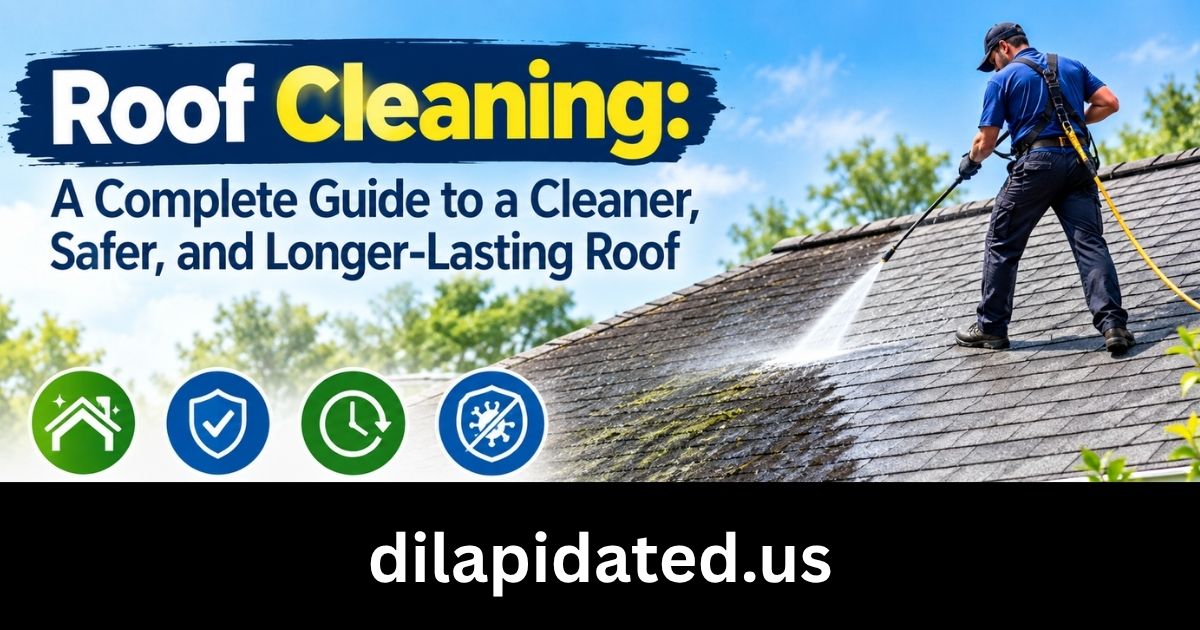
Roof Cleaning: A Complete Guide to a Cleaner, Safer, and Longer-Lasting Roof
Table of Contents
A clean roof can make a noticeable difference to your home’s appearance while also helping protect roofing materials from damaging buildup. Over time, roofs can collect dirt, leaves, moss, algae, lichen, and other organic debris. If these contaminants are ignored, they may contribute to moisture retention, surface deterioration, blocked drainage, and premature aging.
Roof cleaning is therefore more than a cosmetic task. It is an important part of home maintenance that can help homeowners identify minor problems before they become expensive repairs. The right cleaning method depends on the roofing material, the type of buildup, the roof’s slope, and its overall condition.
What Is Roof Cleaning?
Roof cleaning is the process of removing dirt, organic growth, stains, leaves, and other debris from a roof surface. Professional roof cleaning may involve specialized solutions, soft washing, gentle brushing, or other methods designed for a particular roofing material.
Unlike ordinary exterior cleaning, roof cleaning requires extra care because roofing materials can be damaged by excessive pressure, harsh chemicals, or improper equipment. A method that works on one type of roof may be unsuitable for another.
Regular maintenance can help keep the roof looking better and make it easier to spot cracked shingles, damaged flashing, loose materials, or other maintenance concerns.
Why Is Roof Cleaning Important?
Helps Protect Roofing Materials
Moss, algae, and lichen can hold moisture against roofing surfaces. Constant moisture exposure can contribute to deterioration, particularly when organic growth becomes widespread.
Removing buildup helps keep the roof surface cleaner and allows homeowners to inspect areas that may otherwise be hidden.
Improves Curb Appeal
A roof covered with dark stains, moss, or debris can make an otherwise well-maintained house look neglected. Cleaning can restore a more uniform appearance and complement other exterior improvements.
For homeowners preparing to sell a property, roof cleaning may also be part of broader exterior maintenance.
Helps Maintain Roof Drainage
Leaves and organic debris can accumulate around roof valleys, gutters, and drainage areas. If material moves into gutters and downspouts, it can contribute to blockages.
Keeping the roof and drainage system reasonably clear can help rainwater move away from the home as intended.
Makes Roof Problems Easier to Identify
A heavily soiled roof can hide problems. Once surface buildup has been removed, homeowners or roofing professionals may have a clearer view of missing shingles, damaged flashing, cracked components, or areas where repairs may be needed.
Common Causes of Roof Stains and Buildup
Different types of roof buildup require different approaches.
Algae
Dark streaks on asphalt shingles are often associated with algae. These marks are particularly noticeable on roofs that receive limited direct sunlight or remain damp for extended periods.
Algae staining does not necessarily mean the roof is structurally damaged, but extensive growth can affect its appearance and may contribute to moisture-related concerns.
Moss
Moss is more common in cool, damp, shaded environments. It can grow across roofing materials and retain moisture.
Moss should not simply be ripped from shingles because aggressive removal can damage the roofing surface. Gentle cleaning and appropriate treatment are generally safer.
Lichen
Lichen consists of a partnership between fungi and algae or other microorganisms. It can attach firmly to roofing materials and may be more difficult to remove than ordinary dirt.
Aggressive scraping can cause unnecessary damage, so persistent lichen may require a carefully selected professional cleaning method.
Leaves and Organic Debris
Leaves, twigs, pine needles, and other debris can collect on roofs, especially beneath trees. Organic debris can retain moisture and may eventually contribute to moss or algae growth.
Regularly removing accessible debris can help reduce these problems.
Roof Cleaning Methods
The best roof cleaning technique depends on the roofing material and condition.
Soft Washing
Soft washing uses low-pressure water combined with an appropriate cleaning solution. It is often preferred for roofing surfaces that could be damaged by high-pressure water.
The cleaning solution helps break down organic growth, while the low-pressure application reduces the risk of forcing water beneath shingles or damaging the surface.
Low-Pressure Cleaning
Low-pressure methods can remove dirt and biological growth without the force associated with conventional pressure washing.
The goal is to clean the roof effectively while protecting shingles, tiles, membranes, flashing, and other components.
Manual Debris Removal
Leaves, branches, and loose debris can sometimes be removed manually with appropriate tools. This is particularly useful for routine maintenance.
However, homeowners should avoid walking directly on fragile roofing materials or attempting difficult areas without proper safety equipment.
Why High-Pressure Washing Can Be Risky
Pressure washing may seem like a fast solution, but high-pressure water can cause problems on certain roofs.
Strong water pressure can loosen or damage asphalt shingles, remove protective surface granules, damage coatings, and force water into areas where it does not belong. It can also damage delicate roofing components.
For this reason, homeowners should not assume that a standard pressure washer is appropriate for every roof. The roofing material and manufacturer’s recommendations should be considered before selecting a cleaning method.
How Often Should You Clean Your Roof?
There is no universal roof cleaning schedule. A roof surrounded by trees in a damp climate may require attention more frequently than a roof in a dry, open area.
A practical approach is to inspect the roof periodically and look for:
- Dark streaks or stains
- Moss or lichen
- Accumulated leaves
- Excessive debris
- Blocked gutters
- Damaged or missing shingles
- Areas that remain unusually damp
Instead of cleaning simply according to a fixed calendar, homeowners should consider the roof’s condition and environmental exposure.
Roof Cleaning by Roofing Material
Asphalt Shingles
Asphalt shingles require gentle treatment because their protective granules can be damaged by aggressive cleaning. Soft washing or another manufacturer-approved method may be appropriate.
Metal Roofing
Metal roofs can generally be cleaned with suitable low-pressure techniques, but the cleaner should be compatible with the specific coating and finish.
Tile Roofs
Clay and concrete tiles can be durable, but they can still crack under excessive pressure or from improper walking. Cleaning should be performed carefully, particularly on older roofs.
Wood Shingles and Shakes
Wood roofing requires special attention because excessive moisture and inappropriate chemicals can affect the material. A professional assessment may be useful before cleaning.
DIY Roof Cleaning vs. Professional Roof Cleaning
Some basic roof maintenance can be handled by homeowners, but roof cleaning can involve significant safety risks.
DIY Roof Cleaning
Homeowners may be able to remove leaves from accessible areas or clean gutters from a safe position. However, climbing onto a roof introduces fall hazards, particularly on steep, wet, or slippery surfaces.
DIY cleaning also creates a risk of using the wrong chemical or equipment.
Professional Roof Cleaning
Professional roof cleaners have specialized equipment and experience working with different roof types. They can select cleaning methods based on the roofing material and condition.
A professional may also identify maintenance issues that are difficult for an untrained homeowner to recognize.
When hiring a company, ask about insurance, experience, cleaning methods, and whether the proposed process is appropriate for your roofing material.
How Much Does Roof Cleaning Cost?
Roof cleaning costs vary considerably depending on the size and pitch of the roof, roofing material, location, accessibility, and amount of buildup.
A simple roof with light dirt may cost less to clean than a large, steep roof covered with moss or lichen. Additional services, such as gutter cleaning or treatment for persistent organic growth, may also affect the total price.
Rather than choosing a service based solely on the lowest quote, homeowners should compare the proposed cleaning method, included services, experience, and safety practices.
How to Prepare for Roof Cleaning
Before a cleaning service begins, homeowners can make the process easier by:
- Moving outdoor furniture away from walls where appropriate.
- Closing windows and doors.
- Protecting delicate outdoor plants when necessary.
- Making sure outdoor electrical equipment is safely protected.
- Informing the cleaner about known roof leaks or previous repairs.
- Asking what cleaning products and methods will be used.
It is also useful to clarify whether gutter cleaning, debris removal, and cleanup are included in the service.
Tips for Keeping Your Roof Cleaner
Regular maintenance can reduce the amount of heavy cleaning required later.
Trim branches that constantly overhang the roof, keep gutters and downspouts clear, and remove loose debris when it can be done safely from the ground or another secure location.
Improving sunlight and airflow around persistently damp areas may also help discourage moss and algae growth.
Most importantly, address small roof problems promptly. A clean roof should still be inspected periodically for damage.
Frequently Asked Questions About Roof Cleaning
1. Is roof cleaning necessary?
Roof cleaning can be useful for removing algae, moss, lichen, dirt, and debris. It can improve appearance and help homeowners monitor the condition of roofing materials.
2. Can I pressure wash my roof?
High-pressure washing can damage some roofing materials, especially asphalt shingles. A lower-pressure cleaning method designed for the specific roof is often safer.
3. How often should roof cleaning be done?
There is no single schedule for every home. Environmental conditions, nearby trees, roof material, moisture, and the amount of organic growth should determine when cleaning is needed.
4. Does roof cleaning damage shingles?
Properly performed cleaning should minimize the risk of damage. Aggressive pressure, harsh chemicals, scraping, or improper walking on the roof can increase the risk of damaging shingles.
5. Can roof cleaning remove black streaks?
Cleaning can reduce or remove many dark streaks associated with algae. The exact result depends on the severity and age of the staining and the cleaning method used.
6. Should moss be removed from a roof?
Yes, significant moss growth should generally be addressed because it can retain moisture and interfere with roofing surfaces. Removal should be gentle rather than aggressive.
7. Can roof cleaning prevent roof replacement?
Cleaning cannot guarantee that a roof will last longer or prevent replacement. However, regular maintenance can help reduce certain forms of buildup and make it easier to identify problems early.
8. Is professional roof cleaning worth considering?
Professional cleaning can be useful when the roof is steep, difficult to access, heavily contaminated, or made from a material requiring specialized care. Safety is also an important consideration.
Conclusion
Roof cleaning is an important part of responsible home maintenance. Removing algae, moss, lichen, leaves, and accumulated dirt can improve curb appeal while making it easier to monitor the condition of roofing materials.
The most important consideration is choosing a cleaning method that matches the roof. High-pressure washing is not appropriate for every surface, and aggressive cleaning can create damage that costs more to repair than the original buildup.
For homeowners, regular inspections, clear gutters, controlled vegetation, and timely professional maintenance can help keep a roof cleaner and in better condition. When the roof is steep, fragile, heavily covered with growth, or difficult to access, hiring an experienced professional can also reduce safety risks and protect the roofing system.