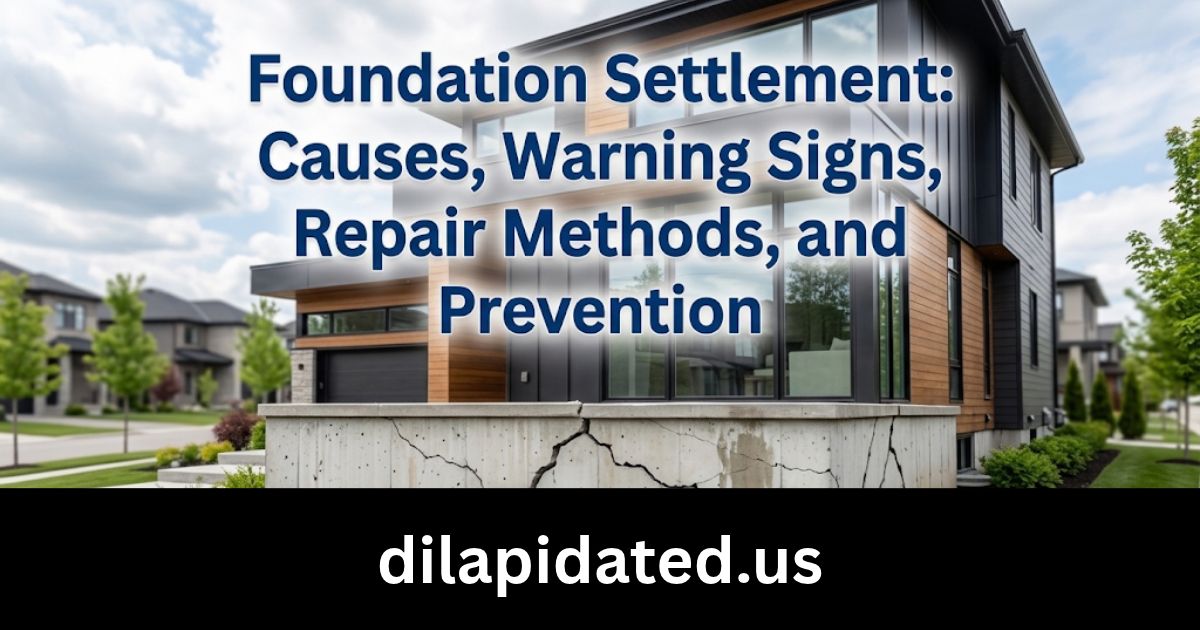
Foundation Settlement: Causes, Warning Signs, Repair Methods, and Prevention
Table of Contents
Introduction
Foundation settlement is a common concern for homeowners because the foundation supports the entire structure of a house. When the soil beneath a building shifts, compresses, or loses its ability to support the structure evenly, the foundation may move downward. Some settlement is normal in new buildings, but excessive or uneven movement can lead to cracks, sloping floors, sticking doors, and other structural problems.
Understanding foundation settlement helps homeowners recognize early warning signs, identify possible causes, and determine when professional assistance is necessary. With proper inspection, suitable repair methods, and preventive maintenance, many foundation problems can be managed before they become more expensive or difficult to address.
What Is Foundation Settlement?
Foundation settlement occurs when a building’s foundation moves downward because the soil beneath it compresses or changes. This movement may happen gradually over several years or develop more quickly after significant changes in soil moisture, drainage, or ground conditions.
A small amount of uniform settlement is often expected as a new structure adjusts to the weight of the building. Problems arise when settlement becomes excessive or uneven. Uneven movement, also called differential settlement, can place stress on walls, floors, ceilings, and other structural components.
The severity of foundation settlement depends on several factors, including soil composition, building weight, foundation design, construction quality, and environmental conditions. Identifying these factors is essential when selecting an appropriate repair strategy.
Common Causes of Foundation Settlement
1. Soil Compression
Soil beneath a foundation must support the weight of the building. When the soil is loose, poorly compacted, or unable to withstand the load, it may compress over time.
Buildings constructed on inadequately prepared ground are particularly vulnerable. If the soil was not properly compacted during construction, the foundation may gradually sink as the ground settles under the structure’s weight.
2. Changes in Soil Moisture
Changes in moisture levels can significantly affect soil stability. Clay-rich soils expand when they absorb water and shrink when they dry. Repeated expansion and contraction can cause foundations to move unevenly.
Heavy rainfall, prolonged drought, leaking pipes, and poor drainage can all contribute to changing soil conditions. Maintaining consistent moisture levels around the foundation can help reduce some of these risks.
3. Poor Drainage
Water accumulating near a building can weaken certain soils, wash away supporting material, or contribute to erosion. Blocked gutters, damaged downspouts, and improperly graded landscaping may direct water toward the foundation.
Over time, these conditions can increase the likelihood of foundation settlement. Proper drainage helps move rainwater away from the building and protects the surrounding soil.
4. Inadequate Foundation Design or Construction
A foundation must be designed for the building’s weight and the ground conditions at the site. If the foundation is too shallow, improperly reinforced, or unsuitable for the soil, it may experience excessive movement.
Construction errors, insufficient site preparation, and the use of inappropriate materials can also contribute to long-term structural problems.
5. Tree Roots and Vegetation
Large trees and shrubs can influence soil moisture by absorbing water through their roots. In moisture-sensitive clay soils, this process may cause the ground to shrink near the foundation.
Roots can also enter existing cracks or interfere with underground drainage systems. However, tree roots do not automatically cause foundation settlement, and removing mature trees without professional advice may create additional soil movement.
6. Underground Water Leaks
Leaking water supply lines, drainage pipes, or sewer systems can alter soil conditions beneath a property. Depending on the soil type, excess water may soften the ground, wash away fine particles, or contribute to erosion.
Unexplained wet patches, unusually high water bills, persistent dampness, and recurring foundation cracks may indicate a plumbing or drainage problem that needs investigation.
Warning Signs of Foundation Settlement
Recognizing the early symptoms of foundation settlement can help homeowners arrange an inspection before damage becomes more serious.
Cracks in Walls and Ceilings
Cracks around windows, doors, corners, and wall joints may indicate structural movement. Diagonal cracks or cracks that continue to widen deserve particular attention.
Not every crack signals a serious foundation problem. Small hairline cracks can result from normal material shrinkage, temperature changes, or plaster movement. Their location, width, pattern, and progression help determine whether further assessment is necessary.
Doors and Windows That Stick
When a foundation moves unevenly, door frames and window openings may become distorted. Doors may stop closing properly, windows may become difficult to operate, or gaps may appear around frames.
These symptoms can also result from humidity or ordinary building movement, so they should be evaluated alongside other warning signs.
Uneven or Sloping Floors
Floors that slope noticeably, develop unexpected dips, or separate from nearby walls may indicate movement in the foundation or supporting structure.
A professional inspection can help distinguish foundation settlement from problems involving floor joists, subflooring, or other building components.
Gaps Around Exterior Features
Foundation movement can create gaps between walls and adjoining structures, including porches, steps, chimneys, and garage floors. Exterior brickwork may also develop stair-step cracks along mortar joints.
Increasing gaps or visibly displaced structural elements should be inspected promptly.
Water Entering the Basement or Crawl Space
Water intrusion may accompany foundation problems, particularly when cracks or drainage defects allow moisture to enter. Persistent dampness, musty odors, and standing water can also damage building materials and encourage mold growth.
Water problems do not always indicate foundation settlement, but they should be addressed to protect the structure.
How Is Foundation Settlement Diagnosed?
Accurate diagnosis is important because repairing the visible symptoms without correcting the underlying cause may allow the problem to return.
Professional Foundation Inspection
A qualified foundation specialist or structural engineer can examine the building for cracks, uneven floors, displaced masonry, and other signs of movement. They may compare measurements across different areas to determine whether the structure is settling unevenly.
The inspection may also include an assessment of exterior grading, drainage systems, plumbing, and nearby trees.
Soil Investigation
In more complicated cases, a geotechnical investigation may be necessary. Soil testing can identify conditions such as weak bearing layers, expansive clay, loose fill, or other ground-related problems.
Understanding the soil profile helps professionals determine whether the foundation requires additional support or whether improvements to drainage and moisture management may be sufficient.
Monitoring Existing Cracks
Cracks can be photographed, measured, and monitored over time to identify changes. Although monitoring provides useful information, it should not replace a professional assessment when cracks are substantial, rapidly growing, or accompanied by other structural warning signs.
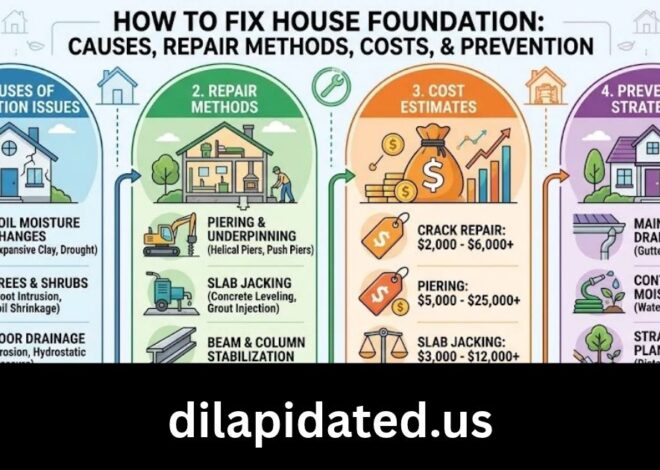
Foundation Settlement Repair Methods
The correct repair method depends on the cause, severity, foundation type, soil conditions, and building design.
1. Foundation Underpinning
Underpinning strengthens an existing foundation by transferring its load to deeper or more stable soil. It may involve extending the foundation below its original depth or using engineered support systems.
This approach is commonly considered when the existing foundation cannot obtain adequate support from the soil immediately beneath it.
2. Helical Piers
Helical piers are steel supports with helical plates that are installed into suitable ground. They can transfer building loads to deeper soil layers with sufficient capacity.
Engineers may recommend helical piers for certain residential structures, depending on the soil conditions, foundation design, and required load capacity.
3. Push Piers
Push piers are typically steel sections driven into the ground using the weight of the structure and specialized installation equipment. When installed correctly, they transfer loads to more competent soil or other suitable bearing layers.
The number, placement, and depth of the piers must be determined by qualified professionals.
4. Slabjacking or Mudjacking
Slabjacking involves injecting material beneath a settled concrete slab to raise or support it. Traditional mudjacking uses a cement-based slurry, while other systems use different lifting materials.
This method may be appropriate for certain sunken sidewalks, garage slabs, driveways, and similar concrete surfaces. It is not a universal solution for major structural foundation settlement.
5. Polyurethane Foam Injection
Some contractors use expanding polyurethane foam to fill voids beneath concrete slabs and provide support. The material expands after injection and can sometimes lift the slab into a more level position.
This method is generally intended for suitable slab-support problems. Its effectiveness depends on the underlying cause and the condition of the supporting soil.
6. Drainage Improvements
When poor water management contributes to foundation movement, repairs may include redirecting downspouts, correcting surface grading, repairing leaking pipes, or installing an appropriate drainage system.
Drainage improvements can reduce further soil-related problems, although they cannot necessarily restore a foundation that has already experienced significant structural movement.
How Much Does Foundation Settlement Repair Cost?
The cost of foundation settlement repair varies considerably according to the extent of damage, local labor rates, soil conditions, building size, accessibility, and the repair method.
Minor drainage corrections or crack repairs may cost considerably less than installing multiple piers or undertaking extensive underpinning. Additional expenses may arise from engineering reports, soil testing, plumbing repairs, permits, and restoring damaged interior finishes.
Homeowners should obtain detailed written estimates from qualified contractors. Each estimate should explain the identified cause, proposed repair method, materials, warranty conditions, and any exclusions.
Choosing the lowest price without understanding the diagnosis can be risky. A reliable repair plan should address the underlying problem rather than simply conceal visible cracks.
How to Prevent Foundation Settlement
Although foundation settlement cannot always be prevented, good maintenance can reduce several common contributing factors.
Maintain Proper Drainage
Keep gutters and downspouts clear and direct rainwater away from the building. Ensure that the surrounding ground slopes appropriately so water does not collect beside the foundation.
Monitor Plumbing Systems
Repair leaking pipes, dripping outdoor faucets, and damaged drainage lines promptly. Investigate unexplained moisture near the building, especially when it appears repeatedly.
Manage Landscaping Carefully
Avoid planting large trees too close to structures without considering their mature size and root systems. Maintain suitable vegetation and seek professional advice before removing established trees near moisture-sensitive soil.
Control Soil Moisture Where Appropriate
In areas with expansive clay, large fluctuations in soil moisture can increase movement. Local engineering guidance may recommend appropriate watering and drainage practices, but excessive watering near the foundation should be avoided.
Inspect the Property Regularly
Check walls, floors, exterior masonry, doors, and windows for changes. Photograph existing cracks and record their measurements so you can identify whether they are growing.
Use Appropriate Construction Practices
For new buildings, proper site preparation, soil assessment, foundation design, and construction supervision are essential. Foundations should be designed for local ground conditions rather than relying on a single standard solution for every property.
When Should You Call a Professional?
Professional assessment is advisable when cracks continue to widen, several doors or windows suddenly begin sticking, floors develop noticeable slopes, or gaps appear between structural elements.
Seek prompt assistance if you observe rapid structural movement, significant displacement, or sudden changes following flooding, excavation, or a major plumbing leak. If part of the building appears unstable, keep people away from the affected area until it has been assessed.
A structural engineer can provide an independent evaluation when the cause or severity of foundation settlement is uncertain. Contractors experienced in foundation repair can then develop a suitable repair plan based on the findings.
Frequently Asked Questions
1. Is foundation settlement normal?
Some initial, relatively uniform settlement can occur as a building’s weight compresses the supporting soil. Excessive or uneven settlement is more concerning because it can damage structural components and requires investigation.
2. Can foundation settlement be repaired?
Yes. Depending on the cause, repairs may include underpinning, pier installation, concrete slab lifting, plumbing repairs, or drainage improvements. The appropriate method depends on the specific conditions at the property.
3. How do I know if my foundation is settling?
Possible warning signs include widening wall cracks, diagonal cracks near doors and windows, sloping floors, sticking doors, and gaps between walls and adjoining structures. A professional inspection can help establish the cause.
4. Can foundation settlement stop on its own?
Some movement may stabilize when soil conditions become consistent, but this cannot be assumed. Continuing settlement may indicate an unresolved problem involving soil support, moisture, or drainage. Professional assessment is recommended when symptoms persist or worsen.
5. Does homeowners insurance cover foundation settlement?
Coverage depends on the insurance policy, location, and cause of the damage. Gradual settlement and ordinary wear may be excluded, while certain sudden events may receive different treatment. Review the policy and contact the insurer before assuming a repair will be covered.
6. Is foundation settlement dangerous?
Minor settlement may cause limited cosmetic damage, but severe or ongoing movement can affect structural stability. Significant cracks, rapidly developing changes, or visibly displaced structural elements should be assessed promptly.
7. How long does foundation settlement repair take?
Small repairs may take a short time, while extensive underpinning or pier installation may require several days or longer. The schedule depends on the number of supports, site access, weather, engineering requirements, and any additional repairs.
8. Can I fix foundation settlement myself?
Homeowners can often improve drainage, maintain gutters, and monitor minor cracks. However, structural settlement should not be treated as a simple DIY repair. Major lifting, underpinning, and other structural work require appropriate engineering and specialized installation.
Conclusion
Foundation settlement can affect a building’s appearance, functionality, and structural stability. Although some initial movement is normal, uneven or continuing settlement may signal problems involving soil compression, moisture changes, drainage, or foundation construction.
Recognizing warning signs early, maintaining effective water management, and arranging a professional inspection can help homeowners understand the extent of the problem. Repair methods range from drainage improvements to underpinning and pier systems, depending on the underlying cause.
The most effective approach to foundation settlement is to identify why the movement occurred and select a repair strategy suited to the building and soil conditions. With proper diagnosis, timely repairs, and consistent maintenance, homeowners can protect their property’s long-term stability and reduce the risk of further damage.