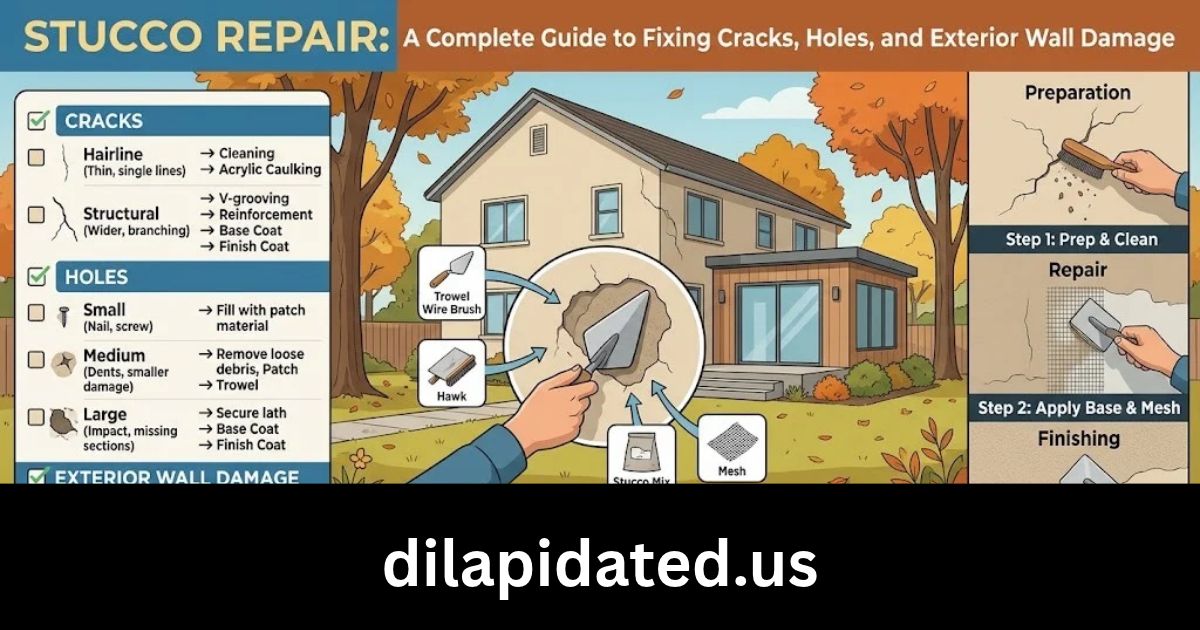
Stucco Repair: A Complete Guide to Fixing Cracks, Holes, and Exterior Wall Damage
Table of Contents
Stucco is a popular exterior wall finish known for its durability, attractive appearance, and ability to withstand different weather conditions. However, even well-maintained stucco can develop cracks, holes, stains, and other signs of damage over time. Proper stucco repair helps restore the appearance of your home, protect the underlying structure, and prevent minor problems from becoming expensive repairs.
Whether you are dealing with small hairline cracks or larger sections of damaged exterior walls, understanding the repair process can help you choose the right solution. This guide explains common stucco repair problems, repair methods, materials, costs, maintenance tips, and when to hire a professional.
What Is Stucco Repair?
Stucco repair is the process of fixing damaged areas in a cement-based exterior or interior wall finish. Traditional stucco repair generally contains cement, sand, and water, while modern products may include lime, acrylics, fibers, or other additives.
Over time, stucco repair can deteriorate because of moisture intrusion, building movement, temperature changes, improper installation, or normal aging. Stucco repair addresses these issues by removing loose material, preparing the damaged surface, applying compatible repair products, and restoring the finish.
The primary goal is not simply to cover visible damage. A successful repair should also identify and address the underlying cause so that the same problem does not return.
Common Stucco Problems That Require Repair
Recognizing the type of damage is the first step toward selecting the correct repair method.
1. Hairline Cracks
Hairline cracks are narrow surface cracks that often appear as stucco repair dries or responds to temperature changes. They may also result from minor building movement.
Small, stable cracks are usually relatively simple to repair using a compatible stucco repair patching compound or crack filler. However, cracks that continue to widen, return repeatedly, or appear around doors and windows may indicate a deeper problem.
2. Large or Deep Cracks
Larger cracks can develop when a building settles, structural components move, or the stucco system is improperly installed. Water may enter through these openings and damage the materials behind the finish.
Before repairing a deep crack, determine whether the surrounding stucco is firmly attached and whether the crack is stable. Recurring or unusually wide cracks should be evaluated by a qualified professional.
3. Holes and Missing Stucco
Holes can occur because of accidental impacts, removed fixtures, deteriorated material, or previous repairs that failed.
Small holes can often be filled with an appropriate patching product. Larger damaged areas may require the removal of loose stucco repair, replacement of damaged reinforcement, and application of multiple layers to restore the original wall system.
4. Water Damage and Staining
Dark stains, bubbling paint, soft areas, white powdery deposits, or crumbling stucco may indicate moisture problems.
White deposits, sometimes called efflorescence, occur when moisture carries dissolved salts to the surface. Although the deposits themselves may be relatively harmless, recurring efflorescence can signal water movement through the wall.
The source of moisture must be identified before the damaged stucco is repaired.
5. Bulging or Loose Stucco
Stucco that bulges outward or sounds hollow when gently tapped may have separated from the underlying surface or reinforcement.
This condition can indicate moisture damage, poor bonding, corrosion of metal reinforcement, or installation defects. Loose sections should not simply be covered with fresh material because the new patch may fail along with the old stucco.
What Causes Stucco Damage?
Understanding the causes of stucco repair deterioration helps homeowners prevent future problems.
Moisture Intrusion
Water is one of the most common causes of serious stucco repair damage. Faulty gutters, leaking roof edges, damaged flashing, poorly sealed windows, and inadequate drainage can direct water into exterior walls.
Moisture may weaken the bond between stucco repair layers, corrode metal components, and damage sheathing or framing. Repairing the visible surface without correcting the leak often leads to recurring problems.
Temperature Changes
Stucco expands and contracts as temperatures change. Repeated movement can create small cracks, particularly where different building materials meet or where joints are missing or improperly placed.
Using suitable materials and maintaining appropriate control joints can reduce cracking caused by normal movement.
Building Settlement
Buildings may experience some movement as foundations and supporting materials settle. Minor movement does not always indicate a serious structural problem, but substantial or continuing movement can produce recurring cracks.
Cracks accompanied by sticking doors, uneven floors, or noticeable wall displacement deserve professional evaluation.
Poor Installation
Incorrect mixing ratios, inadequate surface preparation, insufficient curing, and improper installation of reinforcement or water-management components can shorten the life of a stucco repair finish.
When installation defects are responsible, repairs may need to address more than the visible surface.
How to Repair Stucco Step by Step
The appropriate repair process depends on the size of the damaged area, the stucco system, and the underlying cause.
Step 1: Inspect the Damaged Area
Examine the crack, hole, or damaged section carefully. Look for loose material, discoloration, moisture, bulging, and nearby damage.
Check the surrounding wall for potential sources of water, including roof edges, gutters, downspouts, windows, and doors.
If the damage is extensive, recurring, or potentially structural, arrange a professional inspection before beginning repairs.
Step 2: Gather the Necessary Tools and Materials
Common stucco repair supplies include:
- Safety glasses, gloves, and a suitable dust mask or respirator.
- A stiff brush and scraper.
- A hammer and cold chisel for carefully removing loose material.
- A trowel or putty knife.
- A compatible stucco patching compound or repair mortar.
- Reinforcement mesh or lath when required by the repair system.
- Clean water and mixing equipment.
- Primer and exterior paint, if appropriate for the finished surface.
Always follow the product manufacturer’s instructions. Traditional cement-based stucco and synthetic acrylic stucco may require different repair products.
Step 3: Remove Loose and Damaged Material
Carefully remove crumbling stucco until you reach sound, firmly attached material. Avoid damaging pipes, wiring, weather barriers, or the underlying wall.
For larger repairs, inspect the exposed substrate and reinforcement. Any damaged sheathing, corroded lath, or compromised moisture barrier should be addressed before new stucco repair is installed.
Wear appropriate protective equipment when removing cement-based materials, as dust can irritate the eyes, skin, and respiratory system.
Step 4: Prepare the Surface
Clean the repair area by removing dust, loose particles, and contaminants. Prepare the surface according to the instructions for the selected repair material.
Some cement-based products require a damp substrate, while other products specify a bonding agent or primer. Do not apply a product over wet, unstable, or contaminated material unless its instructions specifically allow it.
Proper preparation improves adhesion and helps prevent premature failure.
Step 5: Apply the Stucco Repair Material
For a small crack, use a compatible crack filler or patching compound suitable for the crack’s size and movement.
For a deeper hole, apply the repair material in the recommended layers. Larger repairs may require a scratch coat, reinforcement, and a finish coat, depending on the stucco system.
Avoid filling deep cavities with one thick application if the product is designed for multiple coats. Follow the manufacturer’s instructions for thickness, working time, and curing.
Step 6: Match the Existing Texture
Matching the surrounding texture is important for an attractive result. Stucco finishes may be smooth, sand-textured, dash, lace, or other decorative patterns.
Use an appropriate trowel, brush, sponge, or finishing tool to reproduce the existing appearance. Test the technique on a small area or sample surface when possible.
Remember that a fresh patch may initially look different from older stucco because of differences in color, weathering, and surface texture.
Step 7: Allow Proper Curing and Finishing
Cement-based stucco needs appropriate curing conditions to develop strength and reduce the risk of cracking. Protect fresh repairs from excessive heat, strong wind, rain, and rapid drying as directed by the product manufacturer.
Once the repair has cured sufficiently, apply a compatible primer and exterior coating if needed. Some stucco systems are designed to remain unpainted or require specific breathable coatings.
Never rush the finishing process by painting before the repair is ready.
How Much Does Stucco Repair Cost?
The cost of stucco repair depends on the size of the damaged area, labor rates, material requirements, accessibility, and the condition of the underlying wall.
| Type of repair | Typical cost factors |
|---|---|
| Small hairline cracks | Limited materials and minimal labor |
| Small holes or patches | Patch size, preparation, and texture matching |
| Larger damaged sections | Removal, reinforcement, and multiple repair layers |
| Moisture-related damage | Leak detection, water-management repairs, and replacement materials |
| Extensive stucco replacement | Scaffolding, labor, substrate repairs, and finishing |
Small do-it-yourself repairs are generally less expensive than professional repairs, but costs can increase considerably if water damage or structural problems are discovered.
For an accurate estimate, request an inspection and written quote that separates surface repairs from any necessary work on flashing, sheathing, reinforcement, or moisture barriers.
DIY Stucco Repair vs. Hiring a Professional
Choosing between a do-it-yourself project and professional service depends on the severity of the damage and your experience.
When DIY Repair Makes Sense
DIY stucco repair may be suitable when:
- The damage is limited to a small, stable hairline crack.
- A small hole does not extend into the underlying wall.
- The surrounding stucco remains firmly attached.
- There are no signs of persistent moisture or structural movement.
- You can safely access the damaged area and follow the product instructions.
Using the right materials and preparing the surface carefully can produce a satisfactory result for minor cosmetic damage.
When to Hire a Stucco Repair Professional
Professional assistance is recommended when cracks are wide or recurring, large sections are loose, water damage is present, or the underlying wall may be compromised.
Professionals can assess the stucco system, identify moisture pathways, replace damaged reinforcement, and recreate complicated textures.
If damage appears related to foundation movement or another structural issue, consult the appropriate building or structural professional before covering the affected area.
Tips to Prevent Future Stucco Damage
Regular maintenance can help extend the life of stucco and reduce repair expenses.
Maintain Gutters and Drainage
Keep gutters and downspouts clear, and direct rainwater away from exterior walls and foundations. Ensure that the ground slopes away from the building where practical.
Inspect Windows, Doors, and Roof Edges
Check flashing, sealants, and other water-management details for deterioration. Replace failed components using suitable materials and installation methods.
Address Small Cracks Early
Inspect exterior walls periodically and investigate new cracks. Repair minor damage when appropriate, but determine the cause before sealing cracks that may be associated with movement or moisture.
Use Compatible Paints and Repair Materials
Not every filler, coating, or sealant works with every stucco system. Choose products intended for the existing finish and follow the manufacturer’s guidance.
Avoid Excessive Pressure Washing
High-pressure water can damage stucco, force moisture into openings, and loosen weakened material. Use gentle cleaning methods appropriate for the surface.
Frequently Asked Questions About Stucco Repair
1. Can I repair stucco myself?
Yes. Small, stable cracks and minor surface holes can often be repaired by homeowners using compatible patching materials. Extensive cracking, loose stucco, and moisture-related damage generally require professional assessment.
2. What is the best product for stucco repair?
The best product depends on the type of stucco and the extent of the damage. Small cracks may need a compatible crack filler, while deeper damage may require cement-based repair mortar or a specialized acrylic stucco patch.
3. Can I paint stucco after repairing it?
Yes, in many cases. The repair must cure sufficiently, and the paint or coating should be compatible with the existing stucco. Follow the product instructions to avoid trapping moisture or causing coating failure.
4. How long does stucco repair take?
Minor patches may take only a few hours of active work, but drying, curing, and finishing can extend the project over several days. Larger repairs may take longer, particularly when the underlying wall needs additional work.
5. Will stucco cracks come back after repair?
They can. Cracks may return if the original cause, such as building movement, moisture intrusion, or inadequate joints, has not been addressed. Correct diagnosis and suitable repair materials improve the chances of a lasting result.
6. Does stucco repair prevent water damage?
Properly completed repairs can help restore the wall’s protective finish, but they cannot solve every moisture problem by themselves. Leaks, flashing defects, drainage issues, and damaged water-resistive barriers must also be corrected.
7. When should damaged stucco be replaced instead of repaired?
Replacement may be appropriate when large areas are deteriorated, the stucco has extensively detached, reinforcement is seriously damaged, or moisture has compromised the underlying wall. A professional inspection can help determine whether localized repairs or broader replacement is more suitable.
Conclusion
Stucco repair is an important part of maintaining a home’s exterior, preserving its appearance, and protecting the wall system from environmental damage. Small cracks and holes may be manageable as DIY projects, while extensive deterioration, recurring cracks, and moisture problems require a more thorough approach.
The most effective repair begins with identifying the cause of the damage, removing unstable material, preparing the surface correctly, and applying compatible products. Proper curing, texture matching, and regular maintenance also contribute to long-lasting results.
By addressing stucco repair problems early and correcting underlying issues, homeowners can protect their property, reduce future maintenance expenses, and maintain a durable, attractive exterior for years to come.