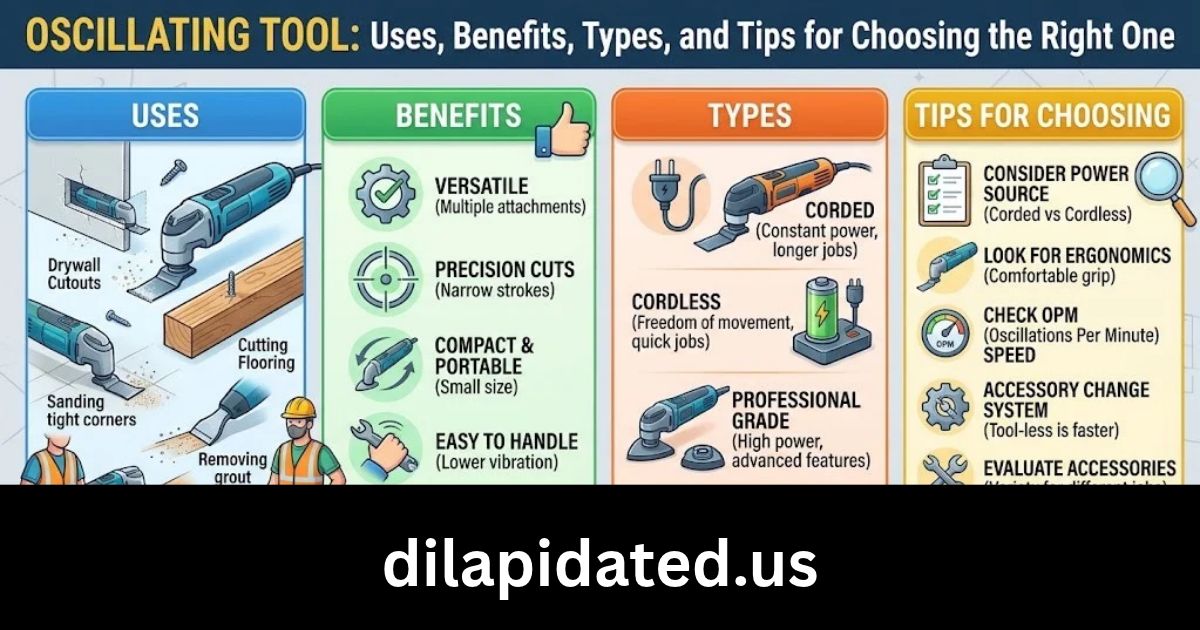
Oscillating Tool: Uses, Benefits, Types, and Tips for Choosing the Right One
Table of Contents
An oscillating tool is one of the most versatile power tools used in home improvement, renovation, woodworking, and DIY projects. Its compact design and rapid side-to-side movement allow it to perform tasks that are difficult for larger tools, including cutting in tight spaces, sanding corners, removing old caulk, trimming door frames, and scraping stubborn materials. Whether you are a professional contractor or a homeowner working on small repairs, an oscillating tool can make many jobs easier and more precise.
Understanding how an oscillating tool works, which attachments to use, and what features matter when buying one can help you get better results while saving time and effort.
What Is an Oscillating Tool?
An oscillating tool is a handheld power tool that moves its attachment rapidly back and forth through a small angle. Unlike a circular saw, which rotates a blade, an oscillating uses short, controlled movements to cut, sand, scrape, and grind different materials.
Most models accept interchangeable accessories, making one tool suitable for several applications. Depending on the attachment, an oscillating can work with wood, plastic, drywall, metal, grout, adhesives, and other construction materials.
Its compact body makes it particularly useful in confined spaces, along edges, and near surfaces where a larger power tool might be difficult to control.
How Does an Oscillating Tool Work?
An oscillating tool contains an electric motor that drives a mechanism responsible for producing rapid angular movement. The motor transfers energy to the tool head, causing the installed blade or accessory to move from side to side.
This short movement allows the attachment to remove material without requiring a large cutting path. The tool can therefore make controlled cuts close to walls, floors, cabinets, and other obstacles.
Many modern oscillating tools include variable-speed controls. Lower speeds can provide better control for delicate materials or scraping tasks, while higher speeds can improve performance during suitable cutting and sanding applications. The correct setting depends on the material, accessory, and manufacturer’s instructions.
Common Uses of an Oscillating Tool
1. Cutting Wood and Trimming Door Frames
An oscillating is useful for making small, precise cuts in wood. One common application is undercutting door casings when installing laminate, vinyl, or other flooring materials.
A suitable wood-cutting blade can trim the bottom of a door frame so that the new flooring fits neatly underneath it. The tool can also cut small sections of timber, trim molding, and shorten wooden components during renovation projects.
For thicker wood, a circular saw or jigsaw may be faster. However, an oscillating tool is often more convenient for short cuts in restricted areas.
2. Cutting Plastic and Drywall
With the appropriate blade, an oscillating can cut plastic pipes, drywall openings, and selected plastic components. It is especially useful when making small access openings for electrical boxes, plumbing adjustments, or repair work.
Before cutting into a wall, check for hidden electrical wiring, plumbing, and other utilities. Use a suitable detector when necessary, and avoid cutting into unknown areas without confirming what lies behind the surface.
3. Sanding Corners and Small Surfaces
Traditional sanders can struggle to reach narrow corners and detailed edges. An oscillating with a triangular sanding pad can reach these areas and smooth surfaces during furniture restoration, cabinet repairs, and woodworking projects.
Different sandpaper grits serve different purposes. Coarse grits remove material more quickly, while fine grits help produce a smoother finish. Starting with an unnecessarily coarse grit can damage delicate surfaces, so choose the abrasive according to the material and the desired result.
4. Removing Old Caulk and Adhesives
An oscillating tool can help remove old caulk, sealant, glue, and other unwanted materials. A suitable scraping attachment is useful when preparing bathroom surfaces, windows, countertops, and other areas for repair.
Work carefully around finished surfaces because an aggressive blade or excessive pressure can scratch tiles, damage paint, or mark nearby materials. For delicate surfaces, a manual scraper may provide better control.
5. Removing Grout Between Tiles
A grout-removal blade designed for the specific material can help remove deteriorated grout during bathroom and kitchen renovations.
The process requires patience because excessive pressure can chip tiles or damage the underlying surface. Select the correct accessory, keep the tool under control, and follow the manufacturer’s instructions for grout removal.
An oscillating is particularly useful for small repair areas, although specialized grout-removal equipment may be more efficient for extensive projects.
6. Cutting Metal
Certain oscillating-tool blades are designed for cutting metal, including nails, screws, and selected thin metal components. This can be helpful when removing old trim, dismantling fixtures, or cutting fasteners that are difficult to reach with other tools.
Use a blade specifically rated for the type of metal being cut. Metal cutting can generate heat and sparks, so remove flammable materials from the work area and wear appropriate eye protection.
7. Scraping Paint and Flooring Materials
Scraper attachments can help remove loose paint, dried adhesive, carpet residue, and flooring materials during renovation. The tool is useful for localized jobs where a large floor scraper would be inconvenient.
However, avoid disturbing old paint or flooring that may contain hazardous substances, including lead or asbestos. Suspected hazardous materials should be assessed and handled using appropriate professional procedures.
Types of Oscillating Tools
Corded Oscillating
Corded models connect directly to an electrical outlet. They are suitable for extended work sessions because they do not depend on battery capacity.
These tools can be a practical choice for workshops, garages, and renovation projects where electrical power is readily available. Their main disadvantage is the power cord, which can restrict movement and become inconvenient in tight work areas.
Cordless Oscillating Tools
Cordless oscillating tools operate using rechargeable batteries. They offer greater freedom of movement and are convenient for outdoor repairs, construction sites, and rooms without easily accessible outlets.
Battery capacity, charging time, tool weight, and compatibility with other tools in the same battery platform are important considerations. A spare battery can be useful during longer projects.
Brushless Oscillating Tools
Brushless models use electronic motor control rather than traditional motor brushes. Depending on the design, they can provide improved efficiency, reduced maintenance, and better battery runtime.
They may cost more than basic models, so the additional expense is most worthwhile for people who use their tools frequently.
Key Features to Consider When Buying an Oscillating Tool
Choosing the right oscillating tool involves more than comparing prices. The best model should match your typical projects, required precision, and available budget.
Variable Speed Control
Variable-speed control allows you to adjust the oscillation rate for different materials and tasks. It can improve handling when sanding delicate surfaces or scraping material that requires a lighter touch.
Oscillation Angle
The oscillation angle affects how far the accessory travels during each movement. Some models offer a larger angle for faster material removal, while others prioritize control. Actual performance also depends on the motor, blade design, and material.
Quick-Change Accessory System
A quick-change mechanism makes it easier to switch between blades, sanding pads, and scrapers. Some systems are tool-free, while others require a wrench or another fastening method.
Check whether the tool accepts commonly available accessories or requires a particular mounting system.
Ergonomics and Weight
A comfortable grip and balanced body can make a significant difference during detailed work. Lightweight models may be easier to use overhead or in tight corners, while heavier models may feel more stable for certain applications.
Consider vibration levels, grip design, and how easily you can reach the speed control.
Dust Management
Sanding and cutting can produce significant dust. Some oscillating tools support dust-extraction attachments that connect to a compatible vacuum.
Dust extraction can improve visibility and reduce airborne particles, although suitable respiratory protection may still be necessary depending on the material and task.
How to Use an Oscillating Tool Safely
Safe operation helps prevent injuries and protects the surrounding work surface.
- Wear protective equipment: Use safety glasses, hearing protection when appropriate, and suitable respiratory protection for dusty work.
- Choose the correct attachment: Match the blade or accessory to the material and intended operation.
- Secure the workpiece: Clamp loose components whenever practical to prevent movement during cutting or sanding.
- Inspect the work area: Check for hidden wiring, plumbing, fasteners, and other obstructions before cutting.
- Start with controlled movements: Allow the accessory to do the work instead of forcing the tool into the material.
- Manage dust and debris: Use suitable extraction and keep the working area clear.
- Disconnect power before changing accessories: Remove the battery or unplug the tool before replacing a blade or performing maintenance, following the manufacturer’s instructions.
- Wait for the accessory to stop: Keep the tool away from the workpiece and your body until movement has completely stopped.
Blades can become hot during use, particularly when cutting metal. Allow accessories to cool before touching them, and never remove built-up material while the tool is powered.
Oscillating Tool vs. Other Power Tools
An oscillating tool is not designed to replace every power tool. Its main advantage is versatility in small, precise, and confined applications.
A circular saw is generally better for long, straight cuts through sheet materials and lumber. A jigsaw is often preferable for longer curved cuts. A random-orbit sander is usually more efficient for smoothing large, flat surfaces.
An angle grinder is better suited to many heavy grinding and cutting applications involving metal or masonry, provided the correct equipment is used.
The oscillating tool stands out when you need to make short cuts, trim materials flush with a surface, sand corners, or scrape residue without moving larger equipment into position.
Maintenance Tips for Better Performance
Regular maintenance can extend the useful life of an oscillating tool and improve its performance.
Clean dust from the housing and ventilation openings according to the manufacturer’s recommendations. Inspect accessories for cracks, worn teeth, or other damage before use. Replace dull blades because they can increase cutting time, vibration, and heat.
Store the tool in a dry location, preferably in a case that protects the body and accessories. For cordless models, follow the battery manufacturer’s charging and storage instructions.
Avoid forcing the motor or blocking ventilation openings. If the tool develops unusual noise, excessive vibration, or electrical problems, stop using it and arrange appropriate inspection or repair.
Frequently Asked Questions About Oscillating Tools
1. What is an oscillating tool best used for?
An oscillating tool is best for precision cutting, trimming, sanding corners, scraping adhesives, removing grout, and performing small renovation tasks in tight spaces.
2. Can an oscillating tool cut metal?
Yes. With a compatible metal-cutting blade, it can cut suitable metal components, such as nails, screws, and thin metal sections. Always verify that the accessory is rated for the material.
3. Can an oscillating tool cut tiles?
It can remove grout and perform certain specialized tile-related tasks with the appropriate attachment. Cutting through an entire tile is not its primary purpose, and a dedicated tile cutter may provide better results.
4. Is an oscillating tool worth buying for home improvement?
It can be a worthwhile investment for homeowners who regularly perform repairs, install flooring, restore furniture, or complete renovation projects. Its value comes from combining several functions in one compact tool.
5. Should I buy a corded or cordless oscillating tool?
Choose a corded model for extended work near an electrical outlet. A cordless model is better for portability and moving between rooms or outdoor work areas. Consider runtime, weight, and battery compatibility before deciding.
6. Are oscillating tool blades universal?
Not all blades fit every oscillating tool. Compatibility depends on the mounting system, adapter requirements, and manufacturer. Check the tool specifications before purchasing replacement accessories.
7. Can beginners use an oscillating tool?
Yes. Beginners can use one for suitable DIY projects if they select the correct attachment, read the instructions, secure the workpiece, and follow appropriate safety precautions.
8. How do I make an oscillating tool cut faster?
Use a sharp blade designed for the material, select an appropriate speed, and allow the accessory to work without excessive pressure. A different tool may be more efficient when the job involves extensive or heavy cutting.
Conclusion
An oscillating tool is a practical addition to a home improvement toolkit because it combines precision, portability, and versatility. From trimming door frames and sanding corners to removing old grout and cutting accessible fasteners, it can simplify many repair and renovation tasks.
When choosing an oscillating tool, consider its power source, speed settings, accessory compatibility, ergonomics, and dust-management options. Use the correct blade, maintain the tool regularly, and follow safety precautions for every application.
With the right accessories and proper technique, an oscillating tool can help homeowners and professionals complete detailed work more efficiently and achieve cleaner results across a wide range of DIY and renovation projects.