Full Bathroom Remodel: Planning, Costs, Design Ideas, and Step-by-Step Guide
Table of Contents
A full bathroom remodel is an excellent way to improve the comfort, functionality, appearance, and value of your home. Whether you want to replace outdated fixtures, install a modern shower, upgrade the flooring, or completely redesign the space, a well-planned renovation can transform an ordinary bathroom into a relaxing and practical environment.
A successful full bathroom remodel requires careful budgeting, thoughtful design, durable materials, and professional installation when necessary. Understanding the renovation process before starting can help you avoid unnecessary expenses, prevent common mistakes, and achieve a bathroom that meets your household’s needs.
What Is a Full Bathroom Remodel?
A full bathroom remodel involves renovating most or all of the bathroom’s major components. Unlike a small cosmetic update, which might include painting walls or replacing a mirror, a complete remodel can change the flooring, plumbing fixtures, lighting, shower or bathtub, vanity, toilet, storage, and wall finishes.
Depending on your goals, the project may also include replacing plumbing pipes, upgrading electrical wiring, improving ventilation, or changing the bathroom layout.
Full Bathroom Remodel vs. Bathroom Renovation
Although these terms are often used interchangeably, they can describe different levels of work. A bathroom renovation may focus on repairing or updating existing features without changing the layout. A full bathroom remodel usually involves more extensive improvements and may include removing old fixtures, installing new materials, and redesigning the space.
The right approach depends on the bathroom’s current condition, your budget, and the improvements you want to make.
How Much Does a Full Bathroom Remodel Cost?
The cost of a full bathroom remodel depends on the room’s size, material quality, labor rates, plumbing requirements, and project complexity. A simple replacement project generally costs less than a complete renovation involving structural changes or moving plumbing fixtures.
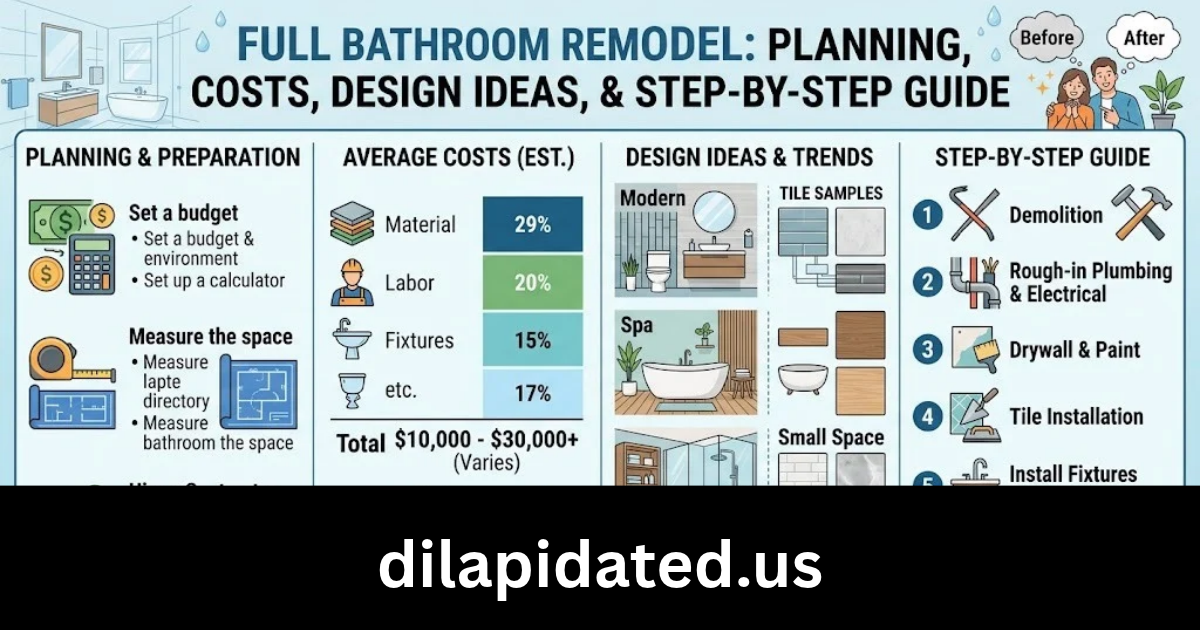
In the United States, a full bathroom remodel can cost several thousand dollars for a basic project and considerably more for a large, high-end renovation. A midrange remodel may fall somewhere around $10,000 to $25,000, while premium projects can exceed $30,000. These are broad estimates rather than guaranteed prices; local labor costs and material availability can significantly affect the final amount.
Factors That Affect Remodeling Costs
Bathroom size: Larger bathrooms usually require more flooring, wall finishes, lighting, and materials.
Material selection: Standard ceramic tiles and basic fixtures are often more affordable than natural stone, custom cabinetry, and luxury fittings.
Plumbing changes: Moving a toilet, shower, or bathtub can increase labor costs because pipes and drainage systems may need to be relocated.
Electrical work: New lighting, outlets, heated flooring, and other electrical improvements may require professional installation.
Waterproofing: Proper waterproofing is essential in wet areas and should never be sacrificed to reduce expenses.
Unexpected repairs: Hidden water damage, mold, deteriorated subfloors, or outdated wiring can increase the total cost.
Create a Realistic Budget
Before beginning your full bathroom remodel, divide your budget into categories such as demolition, plumbing, electrical work, flooring, fixtures, cabinets, labor, and finishing materials.
It is also wise to reserve approximately 10% to 20% of the estimated project cost for unexpected expenses. This reserve provides flexibility if contractors discover hidden problems after removing old materials.
Popular Full Bathroom Remodel Ideas
A bathroom can be designed in many styles, from simple and practical to luxurious and contemporary. The best design balances appearance with ease of maintenance and everyday functionality.
1. Modern Minimalist Bathroom
A minimalist bathroom uses clean lines, simple fixtures, neutral colors, and uncluttered surfaces. White, beige, gray, and soft natural tones can make the space feel calm and spacious.
Floating vanities, frameless mirrors, recessed storage, and understated hardware can create a contemporary appearance without requiring excessive decoration.
2. Walk-In Shower Design
Replacing an old bathtub or enclosed shower with a walk-in shower can create a more open appearance. Frameless glass panels help preserve sightlines, while large-format tiles reduce the number of grout joints.
A walk-in shower should include appropriate waterproofing, a properly sloped floor, and effective drainage. Slip-resistant flooring and well-positioned grab bars can also improve safety.
3. Luxury Bathroom with a Freestanding Bathtub
A freestanding bathtub can become the main feature of a larger bathroom. Pairing it with attractive wall finishes, modern faucets, warm lighting, and coordinated accessories creates a spa-inspired atmosphere.
Before selecting a bathtub, check the available floor space, water supply, drainage location, and the floor’s ability to support its weight when filled.
4. Small Bathroom Remodeling Ideas
Small bathrooms benefit from smart design choices that maximize usable space. Wall-mounted vanities, sliding shower doors, recessed shelves, and large mirrors can help reduce visual clutter.
Light-colored finishes can make a compact room feel brighter, while consistent flooring and simple patterns create a more unified appearance.
5. Natural and Spa-Inspired Bathroom
Natural materials and soft lighting can create a peaceful environment. Wood-look cabinets, stone-inspired tiles, warm neutral colors, and plants suitable for humid conditions can make the bathroom feel more inviting.
Choose moisture-resistant materials, and avoid untreated wood in areas that frequently come into contact with water.
Step-by-Step Full Bathroom Remodel Process
Understanding the remodeling process makes it easier to coordinate contractors, order materials, and plan around temporary bathroom restrictions.
Step 1: Assess Your Existing Bathroom
Start by identifying what works and what needs improvement. Examine the condition of the tiles, bathtub, shower, toilet, vanity, plumbing, electrical fixtures, and ventilation system.
Make a list of essential repairs and optional upgrades. This helps you prioritize spending and prevents attractive design features from distracting you from necessary maintenance.
Step 2: Plan the Layout and Design
Decide whether to keep the existing layout or move major fixtures. Keeping the toilet, shower, and sink in their current locations can reduce plumbing costs and simplify installation.
Measure the room carefully and account for door swings, cabinet clearance, shower access, and walking space. Choose a consistent design style before purchasing tiles, paint, cabinets, and fixtures.
Step 3: Hire Qualified Professionals
Depending on the project’s complexity, you may need a general contractor, plumber, electrician, tile installer, or waterproofing specialist.
Request written estimates that describe the scope of work, material allowances, expected schedule, payment arrangements, and warranty terms. Check relevant qualifications and references before hiring anyone.
For work involving plumbing, electrical systems, or structural changes, confirm local permit requirements and use appropriately qualified professionals.
Step 4: Remove Old Fixtures and Materials
Demolition typically involves removing old cabinets, flooring, tiles, toilets, bathtubs, and shower enclosures as required.
Before demolition begins, arrange for water and electricity to be safely isolated where necessary. Protect nearby rooms from dust and debris, and dispose of construction waste responsibly.
Once the old materials are removed, inspect the exposed walls and floors for leaks, rot, mold, or other damage.
Step 5: Complete Plumbing and Electrical Work
This stage may involve replacing pipes, relocating drains, installing shower valves, adding lighting circuits, or upgrading electrical outlets.
Bathroom electrical installations require special attention because water increases the risk of electric shock. Follow applicable electrical codes and use the required protective devices, including appropriate ground-fault protection where required.
Have relevant work inspected before covering walls or floors.
Step 6: Install Waterproofing and Flooring
Waterproofing is one of the most important parts of a full bathroom remodel. Shower walls, floors, and other wet areas need a suitable waterproofing system installed according to the manufacturer’s specifications.
After preparing the substrate, install the selected flooring and wall tiles. Ensure the shower floor slopes toward the drain and that joints, corners, and transitions are treated correctly.
Poor waterproofing can lead to concealed leaks, damaged subfloors, mold growth, and expensive future repairs.
Step 7: Install the Vanity, Toilet, and Shower Fixtures
Once the main surfaces are complete, install the vanity, sink, toilet, faucets, shower fittings, bathtub, and glass enclosure.
Check that fixtures are securely mounted and correctly connected. Test water pressure, drainage, seals, and connections for leaks before considering the work finished.
Step 8: Finish the Lighting and Details
Complete the remodel with mirrors, cabinet hardware, towel bars, shelves, paint, and accessories. Select lighting that supports everyday tasks while creating a comfortable atmosphere.
A combination of general lighting, mirror lighting, and suitable shower-area lighting can improve both usability and appearance.
Choosing the Best Materials for a Bathroom Remodel
Bathroom materials must withstand moisture, frequent cleaning, and regular use. Appearance matters, but durability and maintenance should also guide your decisions.
Flooring Materials
Porcelain and ceramic tiles are popular because they are durable and available in many colors and patterns. Select flooring with suitable slip resistance for wet conditions.
Water-resistant vinyl flooring may work well in certain bathroom applications, provided the product is approved for the installation and the underlying floor is properly prepared.
Wall and Shower Finishes
Ceramic tiles, porcelain tiles, and suitable waterproof wall panels are common choices for showers and bathroom walls. Natural stone can create an elegant appearance but may require additional sealing and maintenance.
Remember that water-resistant tile surfaces do not automatically make the entire shower waterproof. The system behind the finish is equally important.
Cabinets and Countertops
Choose bathroom cabinets made from materials designed to handle humid environments. Moisture-resistant construction and properly sealed edges can help prevent swelling and deterioration.
Quartz, granite, and other suitable countertop materials offer different combinations of durability, appearance, and maintenance requirements.
Common Full Bathroom Remodel Mistakes to Avoid
Even a beautiful bathroom can develop problems if important details are overlooked.
- Ignoring ventilation: Poor ventilation allows moisture to accumulate and may encourage mold growth.
- Choosing appearance over safety: Extremely slippery flooring can increase the risk of falls.
- Skipping waterproofing: Inadequate waterproofing can cause serious hidden damage.
- Moving plumbing unnecessarily: Relocating fixtures without a clear benefit can increase costs.
- Buying materials too late: Delayed deliveries can extend the construction schedule.
- Underestimating expenses: Failing to reserve money for unexpected repairs can disrupt the project.
- Overlooking storage: Insufficient cabinets and shelving can make the finished bathroom difficult to use.
- Rushing final inspections: Every fixture, drain, electrical component, and seal should be checked before the project is considered complete.
How Long Does a Full Bathroom Remodel Take?
A typical full bathroom remodel may take approximately two to six weeks of active construction, although the schedule varies significantly. A straightforward project with readily available materials may finish sooner, while extensive plumbing changes, custom products, structural repairs, or permit delays can extend the timeline.
Planning and material ordering may begin several weeks before demolition.
To reduce delays, finalize the design early, confirm material availability, coordinate contractor schedules, and address unexpected problems as soon as they appear. If your home has only one bathroom, arrange alternative facilities during periods when the toilet or shower cannot be used.
Does a Full Bathroom Remodel Increase Home Value?
A well-executed bathroom remodel can improve a property’s appeal and make it more attractive to potential buyers. Updated fixtures, clean finishes, functional storage, and modern lighting can help create a positive impression.
However, a remodel does not guarantee a specific increase in property value. The result depends on local real estate conditions, the home’s overall quality, the renovation budget, and buyers’ preferences.
For homeowners planning to sell, durable, neutral finishes and practical improvements may offer broader appeal than highly personalized luxury features.
Frequently Asked Questions
1. What is included in a full bathroom remodel?
A full bathroom remodel typically includes replacing or upgrading flooring, wall finishes, plumbing fixtures, the vanity, toilet, shower or bathtub, lighting, and ventilation. More extensive projects may include new plumbing, electrical work, waterproofing, or layout changes.
2. How much should I budget for a full bathroom remodel?
The budget depends on the bathroom’s size, location, materials, and labor requirements. In the United States, a broad estimate for a midrange full bathroom remodel is around $10,000 to $25,000, but smaller or larger projects can fall outside that range.
3. Can I remodel my bathroom myself?
You can handle some tasks, such as painting, installing simple accessories, or assembling suitable cabinets, if you have the necessary skills. Plumbing, electrical work, structural modifications, and complex waterproofing are often better handled by qualified professionals.
4. Should I replace my bathtub with a walk-in shower?
A walk-in shower can improve accessibility and create a more open appearance. However, keeping a bathtub may be beneficial for households with young children or buyers who prefer having a tub. Consider your needs, available space, and resale goals before deciding.
5. What is the most important part of a bathroom remodel?
Proper waterproofing, plumbing, drainage, and ventilation are among the most important elements because mistakes can cause expensive hidden damage. Attractive finishes should come after the essential construction work has been completed correctly.
6. What is the best flooring for a bathroom?
Porcelain and ceramic tiles are common choices because they are durable and available in many designs. The best option depends on your budget, maintenance preferences, installation requirements, and the flooring’s slip resistance in wet conditions.
7. Can I use my bathroom during remodeling?
Sometimes, but it depends on the work being performed. You may lose access to the toilet, shower, or sink during particular stages. If the home has only one bathroom, plan alternative arrangements before construction begins.
8. How can I reduce the cost of a full bathroom remodel?
Keep the existing layout when practical, compare contractor estimates, choose durable midrange materials, reuse suitable fixtures, and avoid unnecessary structural changes. Never reduce costs by skipping essential waterproofing, electrical safety measures, or plumbing repairs.
Conclusion
A full bathroom remodel can transform an outdated room into a comfortable, attractive, and functional part of your home. The key to success is balancing design preferences with practical requirements, including waterproofing, ventilation, safe electrical installations, reliable plumbing, and durable materials.
Start with a clear budget, establish your priorities, and choose a layout that supports your everyday routine. Compare materials carefully, hire qualified professionals for specialized work, and allow enough time for inspections and finishing details.
With thoughtful planning and proper installation, your full bathroom remodel can deliver lasting comfort, improved usability, and a refreshed appearance that suits your home for years to come.