Raptor Gutter Guard: Features, Benefits, Installation, and Maintenance Guide
Table of Contents
Introduction
Keeping gutters clean is an important part of protecting your home from water damage. Leaves, twigs, pine needles, and other debris can accumulate inside gutters, raptor gutter guard preventing rainwater from flowing properly. Over time, clogged gutters may contribute to overflowing water, foundation problems, roof damage, and soil erosion around your property. A gutter protection system can help reduce these problems and make home maintenance easier.
Raptor Gutter Guard is a gutter protection product designed to help prevent leaves and other debris from entering rain gutters while allowing water to pass through. It is an option for homeowners who want to reduce routine gutter cleaning and improve their roof drainage system.
In this guide, we will explore what Raptor Gutter Guard is, how it works, its potential benefits, installation considerations, maintenance requirements, and the factors to consider before purchasing a gutter protection system.
What Is Raptor Gutter Guard?
Raptor Gutter Guard is a type of gutter protection system designed to cover the opening of a gutter. Its primary purpose is to prevent common debris from entering the gutter while allowing rainwater to drain toward the downspouts.
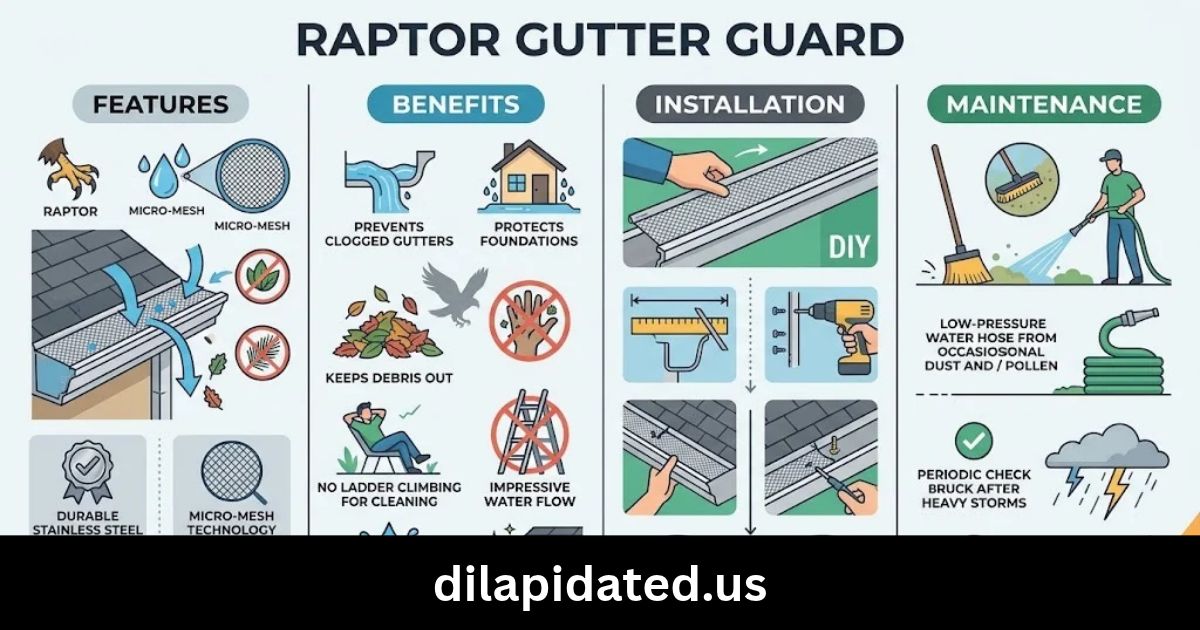
Gutter guards are available in several designs, including mesh screens, micro-mesh panels, foam inserts, and perforated covers. Raptor is associated with micro-mesh gutter protection, a design that uses small openings to help filter debris from incoming rainwater.
The exact materials, dimensions, and installation requirements depend on the particular product model. Homeowners should review the manufacturer’s specifications to confirm compatibility with their existing gutter system.
Why Is Gutter Protection Important?
Gutters collect rainwater from the roof and direct it away from the house. When debris blocks the system, water may overflow over the gutter edges instead of draining through the downspouts.
This overflow can damage landscaping, stain exterior walls, contribute to basement moisture problems, and increase erosion near the foundation. In colder climates, trapped water and debris may also contribute to ice-related gutter problems.
A suitable gutter guard can reduce the amount of debris entering the system, helping homeowners maintain more consistent drainage throughout the year.
How Does Raptor Gutter Guard Work?
Raptor Gutter Guard works by covering the gutter opening with a protective mesh surface. Rainwater passes through the mesh into the gutter, while larger debris remains on top or is prevented from entering.
Micro-Mesh Filtration
Micro-mesh technology uses relatively small openings to help block leaves, seeds, and other common roof debris. Compared with larger-opening gutter screens, micro-mesh designs can offer improved protection against smaller particles.
However, no gutter guard can prevent every type of material from collecting on its surface. Fine particles, pollen, roof grit, and wet organic matter may still accumulate, depending on the roof, weather conditions, and surrounding vegetation.
Water Flow and Drainage
An effective gutter protection system must allow enough water to enter the gutter during heavy rainfall. The roof’s surface area, pitch, gutter size, and rainfall intensity all influence how much water reaches the system.
Correct installation is essential. Poor positioning, an unsuitable gutter design, or an incorrectly fitted guard may interfere with drainage instead of improving it.
Homeowners should make sure the selected product is appropriate for their roof and local weather conditions.
Key Benefits of Raptor Gutter Guard
Gutter protection can offer several advantages when the system is correctly selected and installed.
1. Helps Reduce Gutter Cleaning
One of the main reasons homeowners consider Raptor Gutter Guard is to reduce the frequency of gutter cleaning.
Without protection, leaves and twigs can accumulate inside gutters and require regular removal. A micro-mesh guard helps prevent much of this material from entering the gutter channel.
Although this may reduce maintenance, it does not necessarily eliminate cleaning completely. Debris can collect on top of the mesh, and occasional inspections remain important.
2. Helps Prevent Clogs
Clogged gutters can prevent rainwater from reaching the downspouts. By blocking many common types of debris, gutter guards can help maintain a clearer drainage path.
This benefit is particularly useful for homes surrounded by deciduous trees, pine trees, or other vegetation that regularly sheds leaves and seeds.
The level of protection depends on the mesh design, debris type, installation quality, and maintenance routine.
3. Supports Home Water Management
Proper gutter drainage helps direct water away from exterior walls and foundations. When gutters overflow, rainwater may collect around the base of the house.
Raptor Gutter Guard may help reduce debris-related blockages, supporting the overall performance of the drainage system. However, gutter guards cannot correct problems such as damaged gutters, undersized downspouts, poor roof drainage, or inadequate ground grading.
4. Can Reduce Maintenance Risks
Cleaning gutters often requires ladders and working near roof edges. These activities can be dangerous, particularly for homeowners who lack appropriate equipment or experience.
A gutter guard may reduce how often someone needs to access the gutters for cleaning. Nevertheless, inspections and occasional maintenance may still be necessary.
Professional assistance is advisable when gutters are high, roofs are steep, or access is difficult.
5. Helps Protect Landscaping
When gutters become blocked, water can spill over their edges and wash away mulch, soil, and plants.
By helping maintain the flow of rainwater through the gutter system, gutter protection may reduce debris-related overflow and the resulting damage to landscaping.
The gutter system must still be properly sized, maintained, and connected to functioning downspouts for the best results.
Potential Drawbacks of Raptor Gutter Guard
Before purchasing any gutter protection system, it is important to understand its limitations.
Initial Purchase and Installation Costs
Installing gutter guards requires an upfront investment in materials and, when applicable, professional labor.
Whether the expense is worthwhile depends on the home’s gutter length, roof configuration, local labor costs, and the amount of maintenance the system may save over time.
Homeowners should compare the complete installed cost with the expected reduction in cleaning expenses.
Surface Debris Can Still Accumulate
A gutter guard prevents many materials from entering the gutter, but leaves, needles, pollen, and roof debris may remain on its surface.
Wet leaves can sometimes form a layer that slows water entry. Periodic cleaning may therefore be needed, especially in areas with heavy tree coverage.
Compatibility Must Be Checked
Not every gutter guard fits every gutter system. Differences in gutter shape, width, roof pitch, fascia design, and installation method can affect compatibility.
Before purchasing Raptor Gutter Guard, measure the existing gutters and review the manufacturer’s current installation instructions.
Installation Quality Matters
Even a well-designed gutter guard may perform poorly if it is installed incorrectly.
Gaps, improper positioning, loose fasteners, or interference with roof drainage can create problems. Careful installation is necessary to ensure that water enters the gutters and that the roof’s drainage system continues to work properly.
How to Install Raptor Gutter Guard
Installation requirements vary by model, so always follow the instructions supplied with the specific product. The following steps provide a general overview of the process.
Step 1: Inspect the Existing Gutters
Check the gutters for sagging sections, leaks, loose brackets, rust, and other damage. Repair significant problems before installing a guard.
A gutter protection system should not be used to conceal an existing drainage issue.
Step 2: Clean the Gutters Thoroughly
Remove leaves, twigs, dirt, and other debris from the gutter channels. Check the downspouts to ensure that water can flow through them freely.
Installing guards over dirty or blocked gutters can leave existing problems unresolved.
Step 3: Measure the Gutter System
Measure the length and width of the gutters and identify their shape. Check the product specifications to determine whether the selected Raptor model fits the existing installation.
You should also consider roof edges, corners, valleys, and other areas where water may enter the gutters in large quantities.
Step 4: Position the Gutter Guard
Place the guard according to the manufacturer’s instructions. Some systems attach to the gutter itself, while others use a particular arrangement near the roof edge.
Avoid changing the roof’s shingle placement or fastening components in ways that could damage roofing materials or compromise water protection.
Step 5: Secure the Components
Fasten the guard using the recommended installation method and hardware. Check that the panels are aligned and secure without interfering with the roof, gutter brackets, or other drainage components.
Step 6: Test Water Flow
After installation, inspect the system during suitable rainfall or use a controlled water test when appropriate. Confirm that water enters the gutter and flows toward the downspouts without unexpected overflow.
If water spills over the edge, investigate the cause rather than assuming the guard is working correctly.
Safety note: Roof and ladder work can result in serious injuries. If the installation involves steep roofs, unstable ground, or difficult access, hire a qualified professional.
Raptor Gutter Guard Maintenance Tips
Although gutter guards can reduce routine maintenance, they should not be considered completely maintenance-free.
Inspect the System Seasonally
Inspect gutters and guards at least a few times each year, adjusting the schedule to local conditions. Homes beneath large trees may need more frequent checks.
Look for loose panels, visible damage, accumulated debris, and signs of overflowing water.
Remove Surface Debris
Use a suitable soft brush or another manufacturer-approved cleaning method to remove leaves and other material from the guard surface.
Avoid aggressive cleaning tools that could damage the mesh or protective finish.
Check Downspouts
Water cannot drain properly if the downspouts are blocked. Inspect their outlets and make sure water is directed away from the home’s foundation.
If water continues to collect around the house, investigate drainage and grading issues separately.
Examine the System After Severe Weather
Strong winds, heavy rain, falling branches, and storms can damage gutter guards or loosen their attachments.
After severe weather, inspect the system from a safe location and arrange repairs if necessary.
Is Raptor Gutter Guard Worth It?
Whether Raptor Gutter Guard is worth the investment depends on the home’s surroundings, maintenance needs, and existing drainage system.
It may be a useful option for homeowners who experience frequent gutter clogs because of falling leaves, seeds, or similar debris. Micro-mesh protection may also appeal to people who want to reduce the frequency of gutter cleaning.
However, homes with minimal tree coverage may require less protection. In these cases, the cost of installing gutter guards may not produce enough savings to justify the investment.
Before making a decision, consider the following factors:
- Tree coverage: Homes surrounded by trees may benefit more from gutter protection.
- Gutter condition: Existing damage should be repaired before installation.
- Rainfall intensity: The system must accommodate the amount of water flowing from the roof.
- Installation costs: Compare product and labor expenses with expected maintenance savings.
- Warranty coverage: Review the current product warranty and any installation conditions.
- Maintenance requirements: Confirm how the guard should be inspected and cleaned.
Reading the current product specifications and comparing several gutter protection options can help you determine whether Raptor Gutter Guard is suitable for your home.
Frequently Asked Questions
1. What Is Raptor Gutter Guard Used For?
Raptor Gutter Guard is designed to cover gutters and help prevent leaves and other debris from entering the drainage channel while allowing rainwater to pass through.
2. Does Raptor Gutter Guard Eliminate Gutter Cleaning?
No. It can reduce the amount of debris entering gutters, but material may still collect on the guard’s surface or inside the drainage system. Periodic inspection and maintenance remain necessary.
3. Can Raptor Gutter Guard Handle Heavy Rain?
Performance depends on the product design, installation quality, roof configuration, and rainfall intensity. Check the manufacturer’s specifications to determine whether the system is suitable for your local weather conditions.
4. Can Gutter Guards Be Installed on Existing Gutters?
Some gutter protection products can be fitted to existing gutter systems. However, compatibility depends on gutter dimensions, shape, roof design, and the installation method required by the specific model.
5. Does Raptor Gutter Guard Prevent All Leaves From Collecting?
No. It is designed to reduce debris entering the gutters, but leaves and other materials can still collect on the mesh surface. Occasional cleaning may be required.
6. Is Professional Installation Necessary?
Not in every case. Some homeowners may be able to install compatible systems by following the manufacturer’s instructions. However, professional installation is recommended for steep roofs, difficult access, or situations involving significant safety risks.
7. How Often Should Raptor Gutter Guard Be Inspected?
Inspect it at least a few times per year and after severe weather. Homes surrounded by trees or exposed to frequent storms may need more frequent inspections.
Conclusion
Raptor Gutter Guard is a gutter protection option designed to reduce the amount of leaves and other debris entering a home’s drainage system. Its micro-mesh approach can help minimize blockages, reduce cleaning frequency, and support more reliable rainwater management when properly selected and installed.
However, gutter guards are not a substitute for a well-maintained drainage system. Existing gutter damage, blocked downspouts, inadequate drainage capacity, and poor installation can still cause problems.
Before purchasing Raptor Gutter Guard, review the product specifications, confirm compatibility with your gutters, compare installation costs, and understand the ongoing maintenance requirements. Choosing the right protection system can help make home maintenance more manageable while supporting the long-term performance of your gutters.