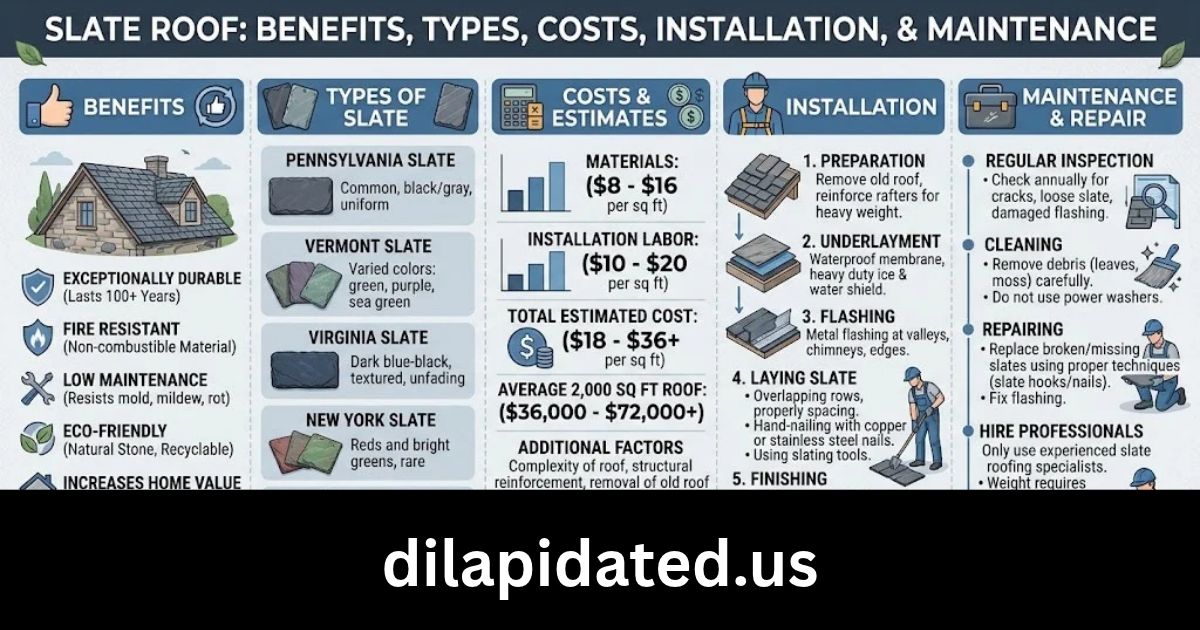
Slate Roof: Benefits, Types, Costs, Installation, and Maintenance
Table of Contents
A slate roof is a popular roofing choice for homeowners who want a combination of natural beauty, durability, and long-term performance. Made from natural stone or manufactured materials designed to resemble stone, slate roofing offers a distinctive appearance that can enhance a property’s architectural style and curb appeal. Although the initial investment is often higher than that of asphalt shingles or other common roofing materials, a properly installed roof can last for generations with appropriate maintenance.
Whether you are building a new home, renovating an older property, or considering a roof replacement, understanding roofing can help you make an informed decision. This guide explores the different types of roofs, their advantages and disadvantages, installation requirements, maintenance needs, and factors that influence overall costs.
What Is a Slate Roof?
A slate roof is a roofing system made from thin, flat pieces of natural slate stone or manufactured slate-like materials. Natural slate is formed through geological processes that transform sedimentary rock under heat and pressure. The resulting stone can be split into thin sheets suitable for roofing.
Slate tiles are installed in overlapping rows to create a protective barrier against rain, snow, and other environmental conditions. Their natural texture, varied colors, and elegant appearance make them suitable for traditional, historic, and contemporary homes.
Unlike many conventional roofing materials, natural slate can retain its appearance for decades without requiring frequent replacement. However, its performance depends on the quality of the stone, correct installation, suitable roof structure, and regular inspections.
Types of Slate Roofing
Several types of roofing are available, and each offers different characteristics in terms of appearance, durability, and cost.
1. Natural Slate Roofing
Natural slate roofing uses genuine stone extracted from quarries and cut into roofing tiles. Each piece has unique textures and subtle variations in color, giving the roof an authentic and distinctive appearance.
Natural slate is available in shades such as gray, black, green, purple, and reddish brown, depending on its mineral composition and source.
High-quality natural slate can last 75 to 100 years or longer when properly selected, installed, and maintained. However, not all slate has the same lifespan, so homeowners should consider its durability classification and expected performance.
2. Synthetic Slate Roofing
Synthetic slate is manufactured from materials such as recycled plastics, polymers, rubber, or composite blends. These products are designed to reproduce the appearance of natural slate while reducing weight and simplifying installation.
Synthetic slate can be a practical option for homes that cannot support the weight of traditional stone roofing without structural reinforcement.
Its durability varies by manufacturer, product composition, installation quality, and climate. Homeowners should review product warranties and long-term performance information before making a purchase.
3. Fiber Cement Slate Roofing
Fiber cement slate is produced using cement and reinforcing fibers to create roofing tiles with a slate-like appearance. It can offer a relatively consistent finish and may cost less than premium natural slate.
However, fiber cement products differ in weight, water resistance, impact performance, and maintenance requirements. Buyers should confirm that the selected product is specifically designed for roofing applications.
4. Reclaimed Slate Roofing
Reclaimed slate consists of tiles recovered from older buildings and prepared for reuse. It is particularly useful for historic renovations where matching the original roof’s appearance is important.
Reclaimed slate can also reduce the demand for newly quarried materials. Before installation, each tile should be inspected for cracks, excessive wear, and other defects.
Benefits of a Slate Roof
Slate roofing offers several advantages that make it attractive to homeowners seeking a durable and visually appealing roofing system.
Exceptional Longevity
One of the main advantages of natural slate is its potential lifespan. High-quality slate installed correctly can last for many decades, sometimes exceeding a century.
This longevity may reduce the need for repeated roof replacements. However, individual tiles, flashing, fasteners, and other components can still require repairs over time.
Attractive Appearance
A slate roof creates a sophisticated appearance that complements many architectural styles. Its natural colors and textures can add character to historic homes, luxury properties, cottages, and modern buildings.
Because natural slate tiles vary slightly, they provide a finish that manufactured roofing products may not fully reproduce.
Fire Resistance
Natural slate is a noncombustible stone, making it highly resistant to fire. This can be an important advantage in areas where fire safety is a priority.
Nevertheless, the overall fire performance of a roof also depends on the underlayment, roof deck, flashing, and other construction materials.
Resistance to Weather
Properly installed slate roofing can provide excellent protection against rain, wind, and freezing conditions when the selected material is appropriate for the local climate.
The overlapping tile design helps direct water away from the roof structure. Correct flashing and drainage are also essential because water can enter through vulnerable joints and poorly detailed areas.
Potential Environmental Benefits
Natural slate may have a long service life and can sometimes be reused or reclaimed. These characteristics can reduce the frequency of roof replacement and associated material waste.
However, quarrying, transportation, and installation also have environmental impacts. The overall sustainability of a slate roof depends on where the stone comes from, how it is transported, and how the roof is maintained.
Disadvantages of Slate Roofing
Although slate roofing has many strengths, it is not the right solution for every property.
High Initial Cost
Natural slate is generally more expensive than common asphalt shingles. The cost includes quarrying, transportation, specialized labor, structural considerations, and installation materials.
Although its long lifespan can offset some replacement expenses, homeowners must still consider their available budget and expected length of ownership.
Heavy Weight
Natural slate is significantly heavier than many alternative roofing materials. Some buildings require structural reinforcement before a slate roof can be installed safely.
A qualified roofing professional or structural engineer should evaluate the roof structure before work begins.
Specialized Installation
Slate installation requires experienced professionals who understand tile selection, fastening techniques, overlapping patterns, and flashing details.
Incorrect installation can cause broken tiles, leaks, and premature roof failure. Finding qualified contractors may also be more difficult in areas where slate roofing is uncommon.
Fragile Tiles
Slate is durable under appropriate conditions, but individual tiles can crack or break when struck, handled improperly, or stepped on incorrectly.
Roof inspections and repairs should be performed by professionals familiar with slate roofing to reduce the risk of additional damage.
How Much Does a Slate Roof Cost?
The cost of a slate roof depends on the roofing material, roof size, design complexity, labor rates, location, and condition of the existing structure.
Natural slate usually costs more than synthetic alternatives because of material sourcing, weight, transportation, and specialized installation requirements.
The following factors can influence the total project price:
- Roof size: Larger roofs require more tiles, underlayment, fasteners, and labor.
- Material quality: Premium natural slate generally costs more than lower-grade slate or synthetic products.
- Roof complexity: Steep slopes, dormers, valleys, and multiple roof sections can increase labor costs.
- Structural reinforcement: Additional support may be necessary if the existing roof cannot safely carry the weight.
- Old roof removal: Removing existing roofing materials can add to the overall expense.
- Flashing and drainage: New flashing, gutters, and related components may be needed.
- Local labor rates: Prices vary by region and contractor experience.
Homeowners should obtain several detailed estimates rather than relying on a single price. Each estimate should specify the roofing material, installation method, underlayment, flashing, removal work, warranty, and any anticipated structural improvements.
Slate Roof Installation Process
Installing a slate roof requires careful planning and specialized workmanship. The exact process depends on the building, roofing product, and local construction requirements.
Step 1: Inspect the Roof Structure
Before installation, the contractor evaluates the roof deck, supporting framework, slope, and overall condition. Because natural slate is heavy, confirming that the structure can support the additional load is essential.
Any necessary repairs or reinforcement should be completed before the roofing materials are installed.
Step 2: Prepare the Roof Deck
The existing roof covering may need to be removed, depending on the project design and applicable building requirements.
The contractor checks the roof deck for rot, moisture damage, and uneven areas. A suitable underlayment is then installed to provide an additional layer of protection against water intrusion.
Step 3: Install Flashing
Flashing protects vulnerable areas around chimneys, skylights, valleys, vents, and roof-to-wall connections.
Proper flashing is particularly important because even durable slate tiles cannot prevent leaks if water enters through poorly protected joints.
Step 4: Lay the Slate Tiles
The installer arranges the tiles in overlapping courses, following the manufacturer’s specifications and established roofing practices.
Tile spacing, overlap, fastening, and placement must be appropriate for the roof slope, tile dimensions, and expected weather conditions.
Step 5: Complete Ridge and Edge Details
Special attention is given to roof ridges, hips, eaves, and other exposed edges. These areas require suitable materials and secure installation to maintain weather resistance.
Step 6: Perform a Final Inspection
After installation, the contractor checks the roof for damaged tiles, incorrect fastening, exposed openings, and flashing problems.
The homeowner should receive documentation covering the materials used, warranties, maintenance recommendations, and any applicable workmanship guarantees.
Slate Roof Maintenance Tips
A slate roof generally requires less frequent replacement than many conventional roofing systems, but regular maintenance remains important.
Schedule Professional Inspections
Arrange periodic inspections with a contractor experienced in slate roofing. Inspections can identify cracked tiles, deteriorating flashing, loose fasteners, and drainage problems before they become serious.
Additional inspections may be appropriate after severe storms or other unusual weather events.
Replace Damaged Tiles Promptly
Cracked or missing tiles can allow water to reach the underlayment and roof deck. Damaged tiles should be replaced using compatible materials and appropriate fastening methods.
A professional should handle this work because walking directly on slate can break otherwise sound tiles.
Keep Gutters and Drainage Clear
Leaves, branches, and other debris can block gutters and downspouts. Poor drainage may cause water to accumulate near roof edges or affect nearby building materials.
Keep drainage systems clear so rainwater can flow away from the property.
Monitor Flashing and Roof Openings
Flashing around chimneys, skylights, and vents can deteriorate even when the slate itself remains in good condition.
Inspect these areas periodically and repair damaged components as needed.
Avoid Pressure Washing
High-pressure washing can damage tiles, force water beneath the roofing, and create unnecessary maintenance problems.
Avoid harsh cleaning methods and consult a roofing professional if moss, algae, or other growth develops.
Slate Roof vs. Other Roofing Materials
Comparing slate with alternative roofing materials can help homeowners determine which option best fits their needs.
Slate vs. Asphalt Shingles
Asphalt shingles are usually more affordable and easier to install. They are widely available and suitable for many residential buildings.
Natural slate typically offers a much longer potential lifespan and a distinctive appearance, but it requires a higher initial investment and a roof structure capable of supporting its weight.
Slate vs. Metal Roofing
Metal roofing is relatively lightweight and can offer excellent durability. Depending on the product, it may also provide efficient water drainage and good performance in various climates.
Slate offers a traditional stone appearance and can last for many decades. Metal roofing is often more practical when reducing structural load is a priority.
Slate vs. Clay Tiles
Clay tiles are known for their distinctive appearance and resistance to fire. They are commonly used in Mediterranean, Spanish, and other traditional architectural styles.
Both clay tiles and natural slate can be heavy, so structural assessment may be necessary. Their cost, weather performance, and maintenance requirements depend on the specific products and installation methods.
Is a Slate Roof Worth the Investment?
A slate roof can be an excellent long-term investment for homeowners who prioritize longevity, natural materials, and architectural character.
It may be particularly suitable for premium homes, historic properties, and buildings designed to accommodate heavy roofing materials.
However, homeowners with limited budgets, lightweight roof structures, or plans to move soon may prefer a less expensive alternative.
The best decision depends on the roof’s structural capacity, local climate, installation costs, maintenance expectations, and the quality of the available materials.
Frequently Asked Questions About Slate Roofs
1. How long does a slate roof last?
A high-quality natural slate roof can last 75 to 100 years or longer when installed correctly and maintained properly. Actual lifespan depends on slate quality, weather exposure, workmanship, and the condition of supporting components.
2. Is a slate roof better than asphalt shingles?
Slate generally offers greater longevity and a distinctive natural appearance, while asphalt shingles are usually less expensive and easier to install. The better option depends on your budget, building structure, and long-term plans.
3. Can slate roofing be installed on any house?
No. Natural slate is heavy, so the roof structure must be able to support its weight. A professional assessment may identify the need for structural reinforcement before installation.
4. Does a slate roof require maintenance?
Yes. Although slate is highly durable, homeowners should arrange inspections, replace damaged tiles, maintain gutters, and check flashing periodically.
5. Can broken slate roof tiles be repaired?
Yes. Individual damaged tiles can often be replaced without removing the entire roof. Repairs should be completed by an experienced slate roofing contractor using compatible tiles and appropriate fastening techniques.
6. Is synthetic slate as durable as natural slate?
Not necessarily. Synthetic slate products vary in composition, durability, weather resistance, and expected lifespan. Review manufacturer specifications and warranty terms before choosing a product.
7. Does a slate roof increase home value?
A well-maintained slate roof may improve curb appeal and attract buyers who value durable, premium building materials. However, its effect on resale value depends on local market conditions, installation quality, and buyer preferences.
Conclusion
A slate roof combines natural beauty, impressive durability, and the potential for exceptional longevity. With several options available, including natural slate, synthetic slate, fiber cement slate, and reclaimed tiles, homeowners can compare materials according to their budgets and design preferences.
Before investing in slate roofing, consider the roof’s structural capacity, installation requirements, local climate, and long-term maintenance needs. Choose a qualified contractor who has experience with slate systems and obtain a detailed project estimate.
With appropriate material selection, professional installation, and regular inspections, a slate roof can provide reliable weather protection and an attractive finish for many decades.