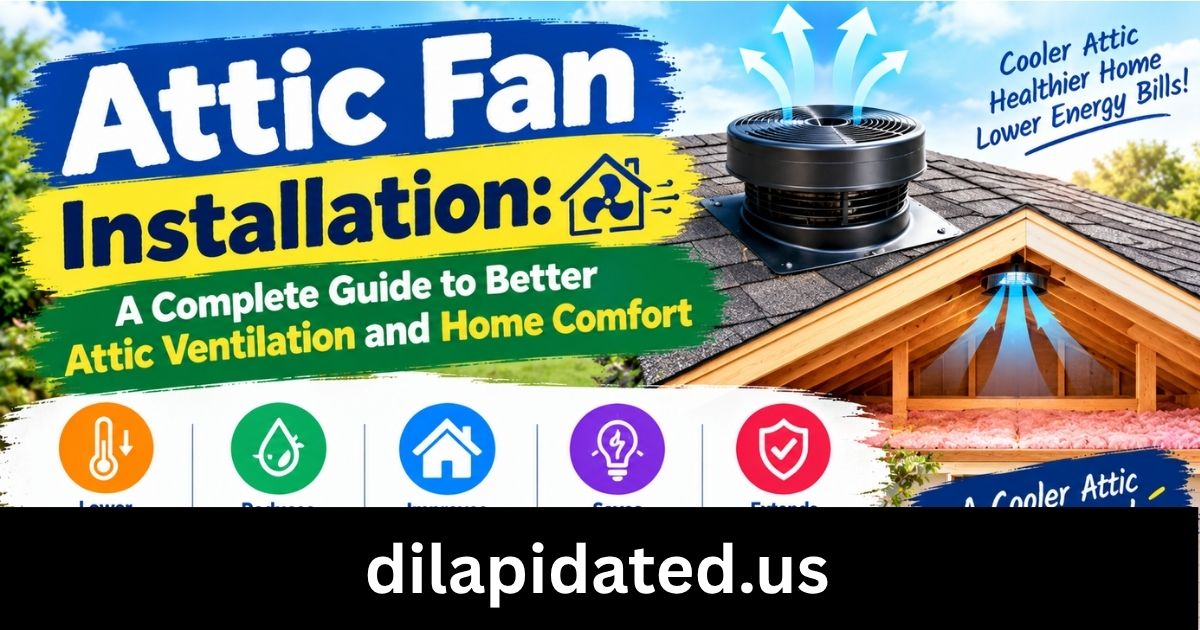
Attic Fan Installation: A Complete Guide to Better Attic Ventilation and Home Comfort
Table of Contents
Attic fan installation can be an effective way to improve airflow in an attic, reduce excessive heat buildup, and support a more comfortable home environment. During hot weather, an attic can become significantly warmer than the living spaces below, especially when ventilation is inadequate. A properly selected and installed attic fan helps move hot air out while allowing fresh air to enter through suitable intake vents.
Whether you are renovating your attic fan installation home, improving energy efficiency, or dealing with a hot and poorly ventilated attic, understanding how attic fans work and what installation involves can help you make informed decisions. This guide explains attic fan types, installation considerations, costs, benefits, maintenance, and common questions homeowners have about attic ventilation.
What Is an Attic Fan?
An attic fan is a mechanical ventilation device designed to move hot or stale air out of an attic space. It works together with passive ventilation systems such as soffit, ridge, gable, or roof vents. The fan creates air movement that can help reduce heat and moisture accumulation.
Attic fans are available in several designs. Some are installed through the roof, while others are mounted in a gable wall. Solar-powered models use sunlight to operate, whereas attic fan installation traditional electric attic fans connect to a household electrical system.
The goal is not simply to remove hot air. An attic ventilation system needs a balanced airflow path. If exhaust fans operate without enough intake ventilation, the fan may pull attic fan installation conditioned air from the living area through gaps in the ceiling, potentially reducing the benefits of the system.
Why Attic Fan Installation Matters
Proper attic ventilation plays an important role in managing heat and moisture. During summer, heat from the roof can accumulate in the attic and raise temperatures throughout the space. In colder weather, moisture from the home can migrate into the attic and contribute to condensation attic fan installation when ventilation is inadequate.
An attic fan can help circulate air and remove accumulated heat when used as part of a properly designed ventilation system. Better attic airflow may also help protect insulation, roofing materials, and wooden components from excessive heat and moisture.
However, an attic fan is not a replacement attic fan installation for proper insulation or adequate passive ventilation. A complete approach usually considers insulation levels, air sealing, intake vents, exhaust vents, and the condition of the roof.
Types of Attic Fans
Roof-Mounted Attic Fans
Roof-mounted attic fans are installed directly through the roof and are designed to exhaust hot air vertically. These systems can provide strong ventilation when positioned correctly.
Because installation requires attic fan installation creating an opening in the roof, waterproofing is particularly important. Poor installation can lead to leaks around the fan housing or flashing.
Gable-Mounted Attic Fans
Gable fans are installed in an existing or specially prepared gable opening. They push hot attic air outside through the gable wall.
One advantage is that they generally do not require cutting a new opening through the roof. However, the effectiveness of a gable fan depends on attic layout and the availability of suitable intake ventilation.
Solar Attic Fans
Solar attic fans use solar panels to power the ventilation motor. They can operate without drawing conventional household electricity, making them attractive for homeowners looking to reduce electrical consumption.
Their performance depends on sunlight, panel placement, fan size, and weather conditions. A solar fan may work particularly well in locations with strong sunlight during the hottest part of the day.
Electric Attic Fans
Electric attic fans use household electricity and can provide consistent operation regardless of sunlight. Some models include thermostats or humidistats that automatically activate the fan when attic temperature or humidity reaches a selected level.
Electrical installation should comply with local electrical requirements and should generally be handled by a qualified professional when new wiring is necessary.
How Attic Fan Installation Works
The exact installation process depends on the fan type and roof or attic structure. A professional typically begins by inspecting the attic to determine the existing attic fan installation ventilation system.
The installer may check the roof condition, insulation, soffit vents, ridge vents, gable vents, and possible air leaks. The fan should be positioned where it can effectively exhaust attic air without interfering with structural components.
For a roof-mounted fan, the installer creates an appropriately sized opening, positions the fan housing, installs flashing or other weatherproofing components, and seals the surrounding area. Electrical connections are then completed if required.
For a gable-mounted unit, the fan is secured within the gable opening and connected to an appropriate power source. The installation should provide a clear path for air to leave the attic.
After installation, the system should be tested to confirm that the fan operates correctly and that air can enter through the intended intake vents.
The Importance of Intake Ventilation
One of the most important considerations in attic fan installation is intake ventilation. An exhaust fan needs replacement air. Without enough intake capacity, it may draw air from unintended locations.
Soffit vents are commonly used to provide intake airflow along the lower edges of a roof. Other systems may use gable or specialized intake vents depending on the home’s design.
Before installing an attic fan, homeowners attic fan installation should evaluate whether the existing intake ventilation is adequate. Adding a powerful exhaust fan without addressing insufficient intake can reduce system efficiency and may contribute to unwanted air movement from the conditioned portion of the house.
Attic Fan Installation Cost
The cost of attic fan installation varies considerably depending on the type of fan, electrical requirements, roof construction, accessibility, labor rates, and whether additional ventilation work is required.
A basic installation may cost less when the attic already has suitable ventilation and electrical access. Roof-mounted installations can become more expensive when additional roof work or weatherproofing is necessary.
Solar attic fans may have a higher upfront equipment cost but can reduce the need for conventional electrical wiring. Electric fans may have lower equipment costs but require an appropriate electrical connection.
Instead of choosing an attic fan based only on its purchase price, homeowners should consider the complete installation, including ventilation improvements, controls, wiring, weatherproofing, and future maintenance.
Benefits of Installing an Attic Fan
Helps Remove Excess Heat
An attic fan can help exhaust hot air that accumulates beneath the roof. This may make the attic environment less extreme during hot weather.
Supports Moisture Control
Proper attic airflow can help reduce stagnant, humid conditions. However, ventilation should be combined with appropriate air sealing and moisture control rather than treated as the only solution.
Complements Existing Ventilation
An attic fan can supplement passive vents when the attic has a suitable intake and exhaust configuration. A balanced system allows air to move through the attic more effectively.
Can Improve Home Comfort
Reducing heat buildup in an attic may help decrease the amount of heat transferred toward rooms below. The actual effect on indoor comfort depends on insulation, air attic fan installation sealing, climate, HVAC performance, and the home’s overall construction.
Common Attic Fan Installation Mistakes
One common mistake is installing a fan without evaluating the entire ventilation system. A fan is only one part of attic ventilation, and insufficient intake vents can limit its performance.
Another mistake is choosing a fan based solely on motor power. Bigger is not always better. The fan should be appropriately matched to the attic size and ventilation design.
Improper roof sealing is another concern. Any roof penetration must be installed and weatherproofed carefully to reduce the risk of water intrusion.
Homeowners should also avoid blocking existing ventilation with insulation. Insulation should be installed while maintaining appropriate airflow through soffit and other intake vents.
Should You Hire a Professional for Attic Fan Installation?
Professional installation can be worthwhile when the project involves roof cutting, electrical wiring, structural considerations, or changes to the existing ventilation system.
A qualified contractor can evaluate the attic, determine whether additional intake ventilation is needed, select an appropriately sized fan, and install the equipment according to applicable requirements.
DIY installation may be possible for some homeowners when the project is straightforward and does not involve complicated electrical or roofing work. However, working on a roof can create fall and weather-related hazards, while electrical work can present shock and fire risks. When in doubt, professional assistance is the safer approach.
How to Maintain an Attic Fan
Regular maintenance helps keep an attic fan operating properly. Start by checking the fan for dust, dirt, or debris that may restrict airflow. Some fans have screens or protective covers that should also be kept clean.
Listen for unusual noises such as grinding, rattling, or excessive vibration. These can indicate worn components, loose hardware, or motor problems.
Electrical connections should be inspected by an appropriately qualified person when necessary. Solar fans should also have their panels kept reasonably clean so they can receive adequate sunlight.
It is also useful to inspect the roof and surrounding flashing after severe weather. Any signs of water leakage should be addressed promptly.
When an Attic Fan May Not Be the Right Solution
An attic fan is not always the first improvement an attic needs. If the attic has inadequate insulation, major air leaks, blocked soffit vents, or moisture problems, those issues should be addressed as part of the overall ventilation strategy.
For example, if conditioned indoor air is escaping through gaps in the ceiling, installing a stronger exhaust fan may not solve the underlying problem. Air sealing and insulation improvements can sometimes provide more meaningful benefits.
A professional attic inspection can help identify whether mechanical ventilation is appropriate for your particular home.
FAQs About Attic Fan Installation
1. How long does attic fan installation take?
A straightforward attic fan installation can often be completed within several hours, although the total time depends on the fan type, roof construction, electrical requirements, and whether additional ventilation work is necessary.
2. Is an attic fan worth installing?
An attic fan can be useful when an attic attic fan installation experiences excessive heat or when additional mechanical ventilation is appropriate. Its value depends on the existing ventilation system, insulation, air sealing, climate, and attic design.
3. Can I install an attic fan myself?
Some simple installations may be suitable for experienced DIY homeowners. However, roof work and electrical connections can involve significant safety risks. Professional installation is recommended when the project requires new wiring, roof modifications, or complicated ventilation changes.
4. Do attic fans reduce air-conditioning costs?
An attic fan may help reduce attic heat buildup, but energy savings are not guaranteed. The result depends on the home’s insulation, air sealing, ventilation design, climate, fan operation, and HVAC system.
5. Are solar attic fans better than electric fans?
Solar and electric attic fans have different advantages. Solar models can operate using sunlight and may avoid conventional electrical wiring, while electric models can provide consistent power regardless of sunlight. The right choice depends on the home’s design and the homeowner’s priorities.
6. Do attic fans need soffit vents?
Attic fans generally work best when attic fan installation there is an appropriate source of intake air. Soffit vents are one common way to provide that intake, although other ventilation configurations may be suitable depending on the attic.
7. How often should an attic fan be maintained?
A visual inspection at least once a year is a practical starting point. Fans should also be checked after severe weather and whenever unusual noise, vibration, reduced airflow, or other problems appear.
8. Can an attic fan prevent roof damage?
An attic fan can support proper ventilation, but it cannot prevent every type of roof damage. Roof condition, flashing, drainage, ventilation, insulation, and moisture control all contribute to roof performance.
Conclusion
Attic fan installation can be a useful home improvement project when it is designed as part of a balanced attic ventilation system. The right fan can help exhaust hot air, support moisture management, and improve airflow, but successful results depend on more than simply installing a powerful motor.
Before choosing an attic fan, evaluate existing soffit and exhaust vents, insulation, air sealing, attic size, roof condition, and electrical requirements. Whether you choose a roof-mounted, gable-mounted, solar, or electric attic fan, proper installation and weatherproofing are essential.
For homeowners unsure about the attic fan installation best approach, an attic ventilation professional can inspect the space and recommend improvements based on the home’s construction and climate. A well-planned attic ventilation system can contribute to a healthier, more comfortable, and better-maintained attic fan installation home.