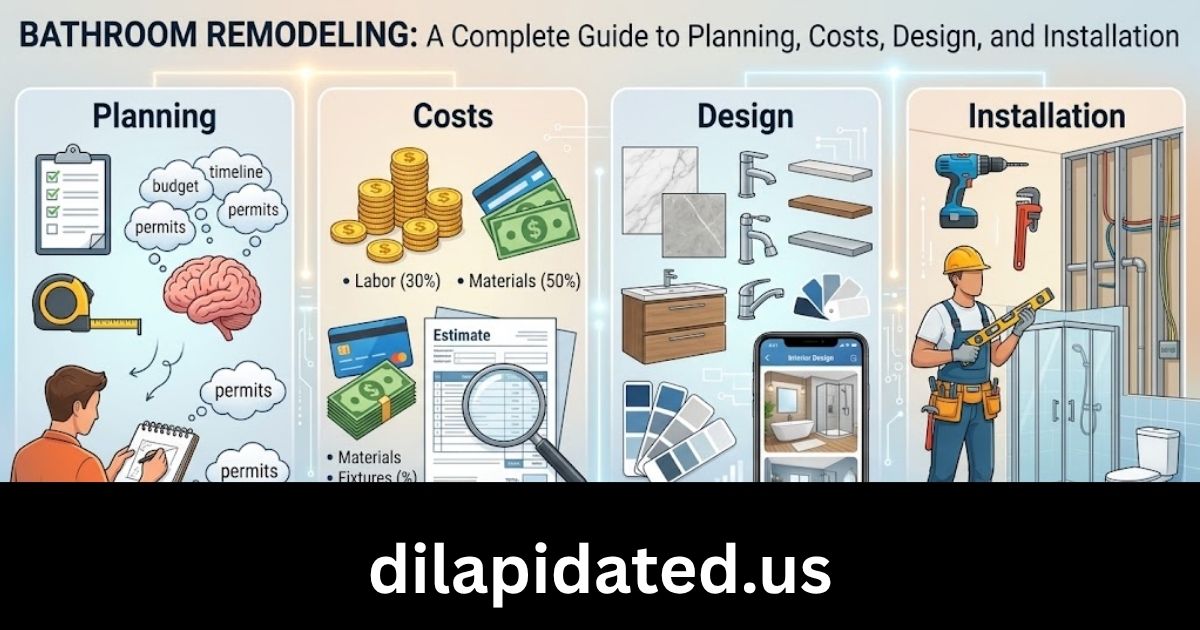
Bathroom Remodeling: A Complete Guide to Planning, Costs, Design, and Installation
Table of Contents
Bathroom remodeling is one of the most practical home improvement projects you can undertake. A well-designed bathroom can improve daily comfort, increase storage, update an outdated space, and potentially add value to your home. Whether you want a simple cosmetic makeover or a complete renovation, careful planning can help you avoid unnecessary expenses and create a bathroom that fits your lifestyle.
This guide explains the most important aspects of bathroom remodeling, including planning, budgeting, materials, layouts, fixtures, common mistakes, and ways to create a stylish and functional space.
What Is Bathroom Remodeling?
Bathroom remodeling involves updating, replacing, or redesigning some or all parts of an existing bathroom. The project can range from replacing a vanity and light fixtures to completely changing the flooring, shower, bathtub, plumbing, electrical systems, and layout.
A minor remodel may focus on appearance, while a major renovation can involve structural and mechanical changes. Your choice will depend on your budget, the condition of the existing bathroom, and what you want to achieve.
Common bathroom remodeling projects include:
- Replacing bathroom flooring
- Installing a new vanity
- Updating countertops
- Replacing a bathtub or shower
- Installing modern faucets
- Improving lighting
- Adding storage
- Repainting walls
- Installing new mirrors
- Updating toilets
- Replacing old plumbing fixtures
- Improving ventilation
How to Plan a Bathroom Remodeling Project
Good planning is the foundation of a successful renovation. Before purchasing materials or removing fixtures, determine what needs to be changed and what can remain.
Define Your Remodeling Goals
Start by making a list of your priorities. For example, you may want a more modern appearance, additional storage, better lighting, improved accessibility, or a larger shower.
Separating your needs from your wants can also help you control your budget. Essential repairs should generally come before decorative upgrades.
Measure the Bathroom
Accurate measurements are important when choosing a vanity, toilet, shower enclosure, bathtub, cabinets, and other fixtures. Measure the room’s length and width and note the location of doors, windows, plumbing connections, electrical outlets, and existing fixtures.
A detailed floor plan can help you determine whether changing the layout is practical.
Set a Realistic Budget
Bathroom remodeling costs vary significantly depending on the size of the bathroom, materials, labor, location, and complexity of the project.
Create separate budget categories for:
- Fixtures
- Flooring
- Wall materials
- Cabinets and vanity
- Countertops
- Plumbing
- Electrical work
- Lighting
- Labor
- Demolition and disposal
- Permits, where required
- Unexpected repairs
It is also wise to keep a contingency fund because opening walls or floors can reveal hidden water damage, outdated wiring, or plumbing problems.
Popular Bathroom Remodeling Ideas
A bathroom does not need to be enormous to look attractive and feel comfortable. Smart design choices can make even a compact bathroom more functional.
Upgrade the Vanity
A new vanity can dramatically change the appearance of a bathroom. Consider a design that provides enough counter space and storage without making the room feel crowded.
Wall-mounted vanities can create a more open appearance, while traditional floor-standing cabinets can provide substantial storage.
Install a Modern Shower
Replacing an outdated shower is one of the most noticeable bathroom upgrades. Frameless or semi-frameless glass can create a cleaner visual appearance, while larger-format wall tiles can reduce the number of visible grout lines.
A walk-in shower can also improve accessibility when designed with an appropriate entry and floor slope.
Improve Bathroom Lighting
Lighting is often overlooked during remodeling. A combination of ambient, task, and accent lighting can make the room more useful and attractive.
Vanity lighting should provide even illumination around the face, while ceiling lighting can illuminate the overall space. If possible, take advantage of natural light through windows or skylights.
Add More Storage
Storage is particularly important in smaller bathrooms. Floating shelves, recessed niches, medicine cabinets, vanity drawers, and tall storage units can provide additional space without taking up too much floor area.
Keep frequently used products within easy reach while storing less frequently used items elsewhere.
Choosing Bathroom Remodeling Materials
Materials should be selected based on both appearance and performance. Bathrooms experience frequent moisture, so durability and water resistance matter.
Bathroom Flooring
Popular flooring choices include porcelain tile, ceramic tile, natural stone, and other water-resistant materials.
Porcelain tile is particularly popular because it is durable and available in many colors, patterns, and textures. For bathroom floors, consider slip resistance as well as appearance.
Wall Tile
Wall tiles can create a strong visual focal point around showers, bathtubs, and vanity areas. Large-format tiles can give a bathroom a contemporary appearance, while smaller tiles can create more decorative patterns.
Always use appropriate waterproofing systems in wet areas rather than relying on tile and grout alone to prevent water intrusion.
Countertops
Bathroom countertops are available in materials such as quartz, natural stone, solid surface, laminate, and ceramic-based options.
The best choice depends on your budget, maintenance preferences, design style, and expected use.
Small Bathroom Remodeling Ideas
A small bathroom can still feel spacious with the right layout and design decisions.
Use lighter colors, large mirrors, glass shower panels, and efficient fixtures to create a sense of openness. A wall-mounted vanity or compact toilet may free up valuable floor space.
Avoid filling every available area with furniture or decorative items. Keeping the floor relatively open can make a small bathroom appear larger.
Another useful strategy is to use one consistent material or color palette throughout the room. Too many competing patterns can make a small space feel visually busy.
Bathroom Remodeling and Plumbing
Plumbing deserves special attention during a renovation. Moving a toilet, shower, sink, or bathtub can require significant plumbing work.
Keeping fixtures close to their existing plumbing locations can sometimes reduce project complexity and labor costs. However, a layout change may be worthwhile if the existing design is inconvenient.
If you discover leaking pipes, poor drainage, damaged subflooring, or other plumbing problems, address those issues before installing new finishes.
For complicated plumbing work, use a qualified professional who understands local building requirements.
Bathroom Ventilation and Moisture Control
Bathrooms naturally produce humidity from showers and baths. Without adequate ventilation, moisture can contribute to mold growth, peeling paint, damaged materials, and unpleasant odors.
A properly sized exhaust fan can help remove humid air. The fan should exhaust outdoors rather than simply moving moist air into an attic or another enclosed area.
During remodeling, also inspect areas around showers, tubs, sinks, and toilets for signs of water damage.
Choosing a Bathroom Remodeling Style
Your bathroom should complement the overall character of your home while reflecting your personal preferences.
Modern Bathroom
Modern bathrooms often feature clean lines, simple cabinetry, neutral colors, large-format tiles, and minimalist fixtures.
Traditional Bathroom
Traditional designs may incorporate detailed cabinetry, classic tile patterns, framed mirrors, and more decorative fixtures.
Spa-Inspired Bathroom
A spa-style bathroom can emphasize relaxation through a walk-in shower, soaking tub, warm lighting, natural textures, and comfortable accessories.
Minimalist Bathroom
Minimalist designs focus on simplicity and functionality. Built-in storage and clean surfaces help reduce visual clutter.
Common Bathroom Remodeling Mistakes
Even a well-intentioned renovation can encounter problems. Avoiding common mistakes can save money and frustration.
One mistake is focusing entirely on appearance while ignoring plumbing, waterproofing, ventilation, or electrical requirements. Attractive finishes cannot compensate for underlying problems.
Another mistake is choosing fixtures without checking measurements. A vanity or shower that looks appropriate online may not fit properly in the available space.
It is also important not to underestimate installation costs. Materials are only one part of the total remodeling budget.
Finally, avoid selecting trendy finishes solely because they are fashionable. Choose materials and colors you will be comfortable living with for years.
How Long Does Bathroom Remodeling Take?
The timeline depends on the size and complexity of the project. A simple cosmetic update may be completed relatively quickly, while a complete renovation involving plumbing, electrical work, waterproofing, custom cabinetry, and tile installation can take considerably longer.
Material availability can also affect the schedule. Custom vanities, specialty tiles, glass enclosures, and other made-to-order products may require additional lead time.
Before work begins, create a project schedule and identify which tasks must be completed in sequence.
Is Bathroom Remodeling Worth It?
Bathroom remodeling can be worthwhile when it solves functional problems while improving the appearance and usability of the space.
A renovated bathroom can provide better storage, modern fixtures, improved lighting, easier maintenance, and greater comfort. It can also make a home more appealing to potential buyers.
However, the best renovation is not necessarily the most expensive one. A thoughtful design that combines quality materials with practical improvements can often deliver better long-term value than spending heavily on unnecessary luxury features.
Frequently Asked Questions
1. How much does bathroom remodeling cost?
The cost varies based on bathroom size, materials, labor, plumbing changes, fixture quality, and the scope of the renovation. A cosmetic update is generally much less expensive than a complete remodel involving layout changes and new plumbing.
2. How long does a bathroom remodel take?
A small renovation may take considerably less time than a full bathroom reconstruction. Projects involving demolition, plumbing, electrical work, waterproofing, tile installation, and custom fixtures can take several weeks depending on complexity and material availability.
3. What should I remodel first in a bathroom?
Start with structural and functional issues such as leaks, plumbing, electrical problems, ventilation, and waterproofing. Once those are addressed, you can move on to flooring, walls, fixtures, cabinetry, lighting, and decorative details.
4. Is it expensive to move bathroom plumbing?
Moving plumbing can increase remodeling costs because pipes and drainage systems may need to be relocated. Keeping fixtures near their existing locations can simplify the project, although changing the layout may be worthwhile when it significantly improves functionality.
5. What flooring is best for a bathroom?
Porcelain and ceramic tile are popular bathroom flooring choices because they are durable and available in many designs. The surface should also provide suitable slip resistance for wet conditions.
6. How can I make a small bathroom look bigger?
Use a simple color palette, large mirrors, good lighting, glass shower panels, compact fixtures, and smart storage. Keeping the floor visually open can also make the room feel more spacious.
7. Do I need a professional for bathroom remodeling?
Simple cosmetic improvements may be manageable as DIY projects if you have the necessary skills. Plumbing, electrical, structural, and waterproofing work can require specialized knowledge and may be subject to local regulations, so qualified professionals are often the safer choice.
8. Should I remodel the whole bathroom at once?
Not necessarily. If the plumbing, layout, and major surfaces are in good condition, you can remodel selected areas. A complete renovation makes more sense when multiple components are outdated, damaged, or poorly designed.
Conclusion
A successful bathroom remodeling project combines attractive design with practical planning. From choosing durable flooring and improving storage to upgrading lighting, ventilation, fixtures, and waterproofing, every decision can affect the final result.
Before starting, establish your goals, measure the space, create a realistic budget, and prioritize essential repairs. Whether you are refreshing a small bathroom or completely redesigning a master suite, thoughtful planning can help you create a comfortable, functional, and long-lasting space that adds value to your home.