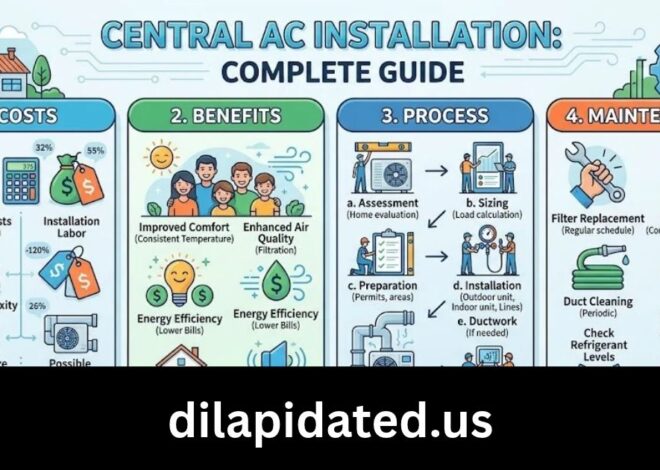
Central Air Installation: A Complete Guide to Cost, Process, and Benefits
Table of Contents
Central air installation is one of the most effective ways to keep an entire home comfortable during hot weather. Unlike portable or window air conditioners that cool individual rooms, a central air conditioning system is designed to distribute conditioned air throughout the house using a network of ducts.
Installing central air is a significant home improvement project that requires careful planning, proper equipment sizing, professional installation, and regular maintenance. Whether you are replacing an old cooling system or adding central air to a home for the first time, understanding the installation process can help you make informed decisions and avoid unnecessary expenses.
What Is Central Air Installation?
Central air installation involves setting up an air conditioning system that cools air at a central indoor unit and distributes it through ductwork to different rooms. A typical system includes an outdoor condenser, indoor evaporator coil, refrigerant lines, electrical connections, a thermostat, and supply and return air ducts.
The outdoor unit removes heat from the home, while the indoor components central air installation help cool and circulate air. When the thermostat detects that the indoor temperature is higher than the selected setting, the system starts a cooling cycle.
A properly installed central air conditioner can provide more consistent temperatures than individual room air conditioners and can be integrated with an existing forced-air heating system.
When Should You Consider Central Air Installation?
Homeowners may consider central air installation for several different reasons. One common situation is replacing an aging air conditioner that frequently needs repairs or struggles to cool the house.
Central air may also be worthwhile when building a new home or completing a major renovation. Installing the system while other construction work is underway can make it easier to install or modify ductwork, electrical connections, and other components.
Another reason is uneven cooling. If certain rooms are consistently warmer than others, a properly designed central system may provide better overall temperature control. However, uneven cooling can also be caused by inadequate insulation, poorly designed ducts, blocked vents, or an incorrectly sized air conditioner.
How Does Central Air Installation Work?
The installation process varies depending on the home’s layout and whether ductwork already exists. A professional HVAC contractor typically follows several major steps.
1. Home and Cooling Assessment
Before selecting equipment, the contractor should evaluate the home’s size, insulation, windows, orientation, existing ductwork, and other factors that affect cooling requirements.
The goal is to determine the appropriate capacity rather than simply choosing the largest available unit. An oversized air conditioner can cycle on and off too frequently, while an undersized system may run continuously without adequately cooling the home.
2. Selecting the Air Conditioner
Central air conditioners come in different sizes, efficiency ratings, configurations, and price ranges. The right equipment depends on the home’s cooling load, local climate, available electrical service, budget, and existing HVAC setup.
A professional can help determine whether a split system, packaged system, or another configuration is appropriate for the property.
3. Installing the Outdoor Unit
The outdoor condenser should be placed on a stable, level surface with adequate clearance for airflow and maintenance. It should be positioned away from obstructions that could restrict air circulation.
The location should also allow technicians to access the unit easily for future inspections and repairs.
4. Installing the Indoor Components
The indoor evaporator coil and associated components are normally installed near the furnace or air handler. If the home already has a compatible forced-air heating system, some components may be integrated into the existing setup.
Proper connections are important because refrigerant, electrical, condensate, and airflow systems all need to operate safely and efficiently.
5. Connecting Refrigerant and Electrical Lines
Refrigerant lines connect the outdoor condenser with the indoor coil. Electrical wiring supplies power to the system and connects the thermostat and other controls.
These parts of the installation should be central air installation handled by qualified professionals because incorrect refrigerant or electrical work can cause equipment damage, poor performance, or safety problems.
6. Checking Ductwork
If the home already has ducts, the installer should inspect them for leaks, damage, poor insulation, and inadequate sizing. In some homes, existing ductwork may need modification before central air can perform effectively.
Homes without suitable ducts may require new ductwork, which can substantially increase the complexity and cost of installation.
7. Testing the System
After installation, the contractor should test the system and verify airflow, temperature performance, electrical operation, refrigerant conditions, thermostat controls, and condensate drainage.
Testing helps identify installation problems before the system is put into regular service.
Central Air Installation With Existing Ductwork vs. New Ductwork
The condition of your home’s ductwork can have a major effect on the project.
If suitable ducts are already installed, central air installation can be relatively straightforward because the contractor may only need to add or replace the cooling equipment and make necessary connections.
Installing central air in a home without ductwork is more involved. New ducts may need to be routed through attics, crawl spaces, ceilings, walls, or other areas. Depending on the home’s construction, this may involve additional labor and finishing work.
For homes without ducts, alternatives such as ductless mini-split systems may also be worth discussing with an HVAC professional.
How Much Does Central Air Installation Cost?
The cost of central air installation varies widely because every property and installation is different. Major factors include the size and efficiency of the system, local labor rates, ductwork requirements, electrical upgrades, equipment brand, accessibility, and whether an existing HVAC system can be reused.
A basic replacement using existing compatible ductwork may cost considerably less than installing a completely new system in a house that has never had central air.
Instead of focusing only on the equipment’s purchase price, homeowners should consider the complete installation cost. A detailed estimate should explain equipment, labor, ductwork modifications, electrical work, permits where applicable, removal of old equipment, and other charges.
Factors That Affect Central Air Installation Cost
System Size
Larger systems generally cost more, but bigger is not automatically better. The system should be correctly matched to the home’s cooling load.
Energy Efficiency
Higher-efficiency equipment may have a higher upfront cost but can reduce electricity consumption under suitable operating conditions.
Ductwork
Repairing, sealing, replacing, or installing ducts can add significantly to the overall project.
Electrical Requirements
Some installations may require electrical modifications or upgrades to safely support the new equipment.
Home Layout
Multi-story homes, older properties, and houses with difficult access can require more labor and planning.
Local Climate
The cooling requirements of a home depend partly on the local climate. A system designed for a very hot environment may need different capacity considerations than one installed in a mild climate.
How to Choose a Central Air Installation Contractor
Choosing a qualified HVAC contractor is an important part of the project. Look for a company with experience installing central air systems similar to the one required for your home.
Ask for a written estimate rather than relying on a verbal price. The estimate should clearly identify the equipment being installed and the work included.
It is also useful to ask about warranties, maintenance requirements, permits, expected installation time, and what happens if the system develops a problem after installation.
Homeowners should be cautious about contractors who recommend equipment without evaluating the property or who automatically suggest an unusually large air conditioner.
Signs Your New Central Air System Was Installed Properly
A well-installed central air system should provide consistent cooling without excessive noise, unusual odors, frequent short cycling, or unexplained temperature differences.
The thermostat should communicate properly with the equipment, supply vents should have appropriate airflow, and condensate should drain correctly.
Good installation also includes proper sealing and insulation of relevant duct connections, secure electrical connections, appropriate refrigerant work, and adequate clearance around the outdoor condenser.
How to Maintain a Central Air Conditioner
Regular maintenance can help a central air conditioner operate efficiently and reliably.
Replace or clean air filters according to the manufacturer’s recommendations and household conditions. Dirty filters can restrict airflow and make the system work harder.
Keep the outdoor condenser area clear of leaves, debris, vegetation, and other obstructions. The indoor and outdoor components should also receive periodic professional inspections.
Routine maintenance may include checking electrical components, cleaning coils, inspecting refrigerant-related components, examining condensate drainage, and evaluating system performance.
Central Air Installation and Energy Efficiency
Energy efficiency should be considered before purchasing a new central air conditioner. However, equipment efficiency is only one part of the equation.
A highly efficient air conditioner can still perform poorly if the system is incorrectly sized, ducts leak, insulation is inadequate, or airflow is restricted.
Improving insulation, sealing duct leaks, upgrading inefficient windows where appropriate, and using a programmable or smart thermostat can complement a new central air installation.
Common Mistakes to Avoid
One of the biggest mistakes is choosing an air conditioner based solely on price or maximum capacity. The cheapest system may not provide the best long-term value, while an oversized system can create comfort and humidity-control problems.
Another mistake is ignoring ductwork. Even excellent equipment cannot compensate for severely leaking or poorly designed ducts.
Homeowners should also avoid skipping professional installation. Central air involves electrical connections, refrigerant systems, airflow design, and condensate management, making proper installation important for performance and safety.
FAQs About Central Air Installation
1. How long does central air installation take?
A straightforward replacement with existing compatible ductwork may be completed relatively quickly, while a new installation requiring extensive ductwork can take considerably longer. The exact timeframe depends on the home and project complexity.
2. Can central air be installed in an old house?
Yes. Older homes can receive central air, although existing ductwork, electrical capacity, insulation, and available installation space may require evaluation or upgrades.
3. Can I install central air without ductwork?
Traditional central air systems generally require ductwork to distribute conditioned air. If installing ducts would be impractical, a ductless mini-split system may be an alternative.
4. Does central air increase electricity bills?
A central air conditioner uses electricity, so operating it can increase energy consumption. The actual increase depends on equipment efficiency, climate, thermostat settings, insulation, home size, and how frequently the system operates.
5. How often should central air conditioning be serviced?
Many homeowners have their HVAC system professionally inspected at least once a year. The exact maintenance schedule should follow the equipment manufacturer’s recommendations and local conditions.
6. Should I replace my furnace when installing central air?
Not necessarily. If the existing furnace or air handler is compatible and in good condition, it may be possible to add or replace the cooling components without replacing the heating system.
7. What size central air conditioner does my home need?
System size should be determined through a proper cooling-load calculation rather than simply using the home’s square footage. Factors such as insulation, windows, climate, ceiling height, and home orientation can affect the required capacity.
Conclusion
Central air installation can be a major home improvement project that significantly changes how a house is cooled. The best results come from selecting correctly sized equipment, evaluating existing ductwork, ensuring proper electrical and refrigerant connections, and using qualified installation professionals.
Before starting the project, compare complete written estimates and consider both upfront costs and long-term operating expenses. With appropriate planning, professional installation, and regular maintenance, a central air conditioning system can provide dependable whole-home comfort for many years.