Lowe’s Distribution Center: How It Works, Services, Locations, and Importance in Home Improvement
Table of Contents
Introduction
A Lowe’s distribution center plays an important role in keeping home improvement products available to customers across the United States. From lumber and building materials to appliances, tools, paint, flooring, and outdoor supplies, these facilities help move products from manufacturers to retail stores and, in some cases, directly to customers.
Lowe’s is a major home improvement retailer serving homeowners, contractors, property managers, and do-it-yourself enthusiasts. Behind its stores is a supply chain that relies on distribution centers, warehouses, transportation networks, and inventory management systems. Understanding how a Lowe’s distribution center operates can help customers, suppliers, and job seekers learn more about the company’s logistics operations.
What Is a Lowe’s Distribution Center?
A Lowe’s distribution center is a large logistics facility that receives, stores, organizes, and ships merchandise to support the retailer’s stores and delivery operations. These facilities help ensure that products arrive where they are needed and that stores can maintain appropriate inventory levels.
Unlike a typical retail store, a distribution center generally does not operate as a public shopping destination. Its primary purpose is to handle merchandise efficiently rather than sell individual products directly to walk-in customers.
Distribution centers may specialize in different types of merchandise, depending on the facility’s size, equipment, location, and role within the supply chain.
Main Purpose of a Distribution Center
The main purpose of a Lowe’s distribution center is to connect suppliers with retail locations and other delivery destinations. Instead of every store managing its own shipments from numerous manufacturers, distribution facilities consolidate products and coordinate their movement.
This approach can help reduce transportation costs, improve inventory availability, and make it easier to replenish popular products. It also supports seasonal demand for items such as garden supplies, snow equipment, holiday decorations, and outdoor living products.
How Does a Lowe’s Distribution Center Work?
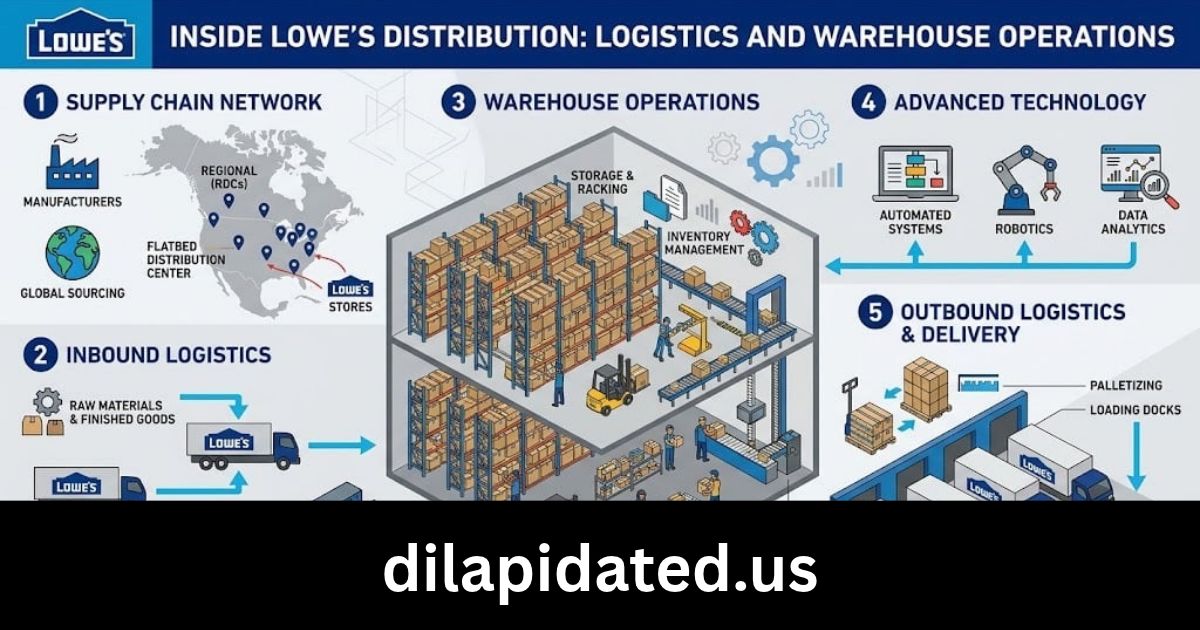
A distribution center follows several interconnected steps to move products through the supply chain.
1. Receiving Products
The process begins when merchandise arrives from manufacturers, wholesalers, or other suppliers. Employees and equipment unload shipments, check quantities, inspect goods for visible damage, and record inventory information.
Accurate receiving procedures help prevent inventory discrepancies and ensure products are available for later shipment.
2. Storing and Organizing Inventory
After receiving, products are assigned to designated storage areas. Smaller items may be placed on shelves or racks, while large appliances, lumber, and bulky building materials require specialized storage arrangements.
Warehouse management systems help track product locations and quantities. Proper organization allows employees to retrieve merchandise efficiently and reduces the risk of shipping incorrect items.
3. Picking and Preparing Orders
When a store or delivery operation needs merchandise, employees or automated systems identify and collect the required products. Orders are then checked, grouped, and prepared for transportation.
Different products require different handling methods. Fragile items need protection, heavy materials require appropriate lifting equipment, and large products may need special loading arrangements.
4. Shipping and Transportation
Once an order is ready, it is loaded onto the appropriate vehicle and sent to its destination. Transportation planning considers delivery schedules, product dimensions, vehicle capacity, and the needs of receiving stores.
This final stage helps maintain product availability and supports the broader Lowe’s home improvement supply chain.
Types of Lowe’s Distribution Centers
Lowe’s uses different types of supply chain facilities to handle merchandise based on its size, destination, and delivery requirements. According to the company’s corporate information, its network includes more than 130 supply chain facilities.
Lowe’s Corporate
+1
1. Regional Distribution Centers
Regional distribution centers, commonly called RDCs, manage a broad range of products destined for retail stores. They receive merchandise from suppliers, organize inventory, and coordinate shipments across their assigned service areas.
These facilities are essential for maintaining consistent stock levels and helping stores replenish products customers purchase regularly.
2. Flatbed Distribution Centers
Flatbed distribution centers specialize in products that are difficult to transport using standard parcel or pallet-handling methods. Typical merchandise includes lumber, plywood, siding, pipes, ladders, and other building materials.
These facilities are particularly important for contractors and customers working on construction, roofing, fencing, and large home renovation projects.
3. Bulk Distribution Centers
Bulk distribution centers handle large and heavy products, including major appliances and other bulky merchandise. Their operations are designed to accommodate products that require additional storage space and specialized handling.
These centers help coordinate the movement of refrigerators, washers, dryers, and similar products through the supply chain.
4. Import Distribution Centers
Import distribution centers support merchandise entering the country from international suppliers. By providing space to hold imported inventory, these facilities help Lowe’s manage incoming shipments and distribute products according to demand.
Their role can improve flexibility when transportation schedules, supplier lead times, or customer demand change.
5. Cross-Dock Terminals and Fulfillment Centers
Cross-dock terminals help transfer merchandise between incoming and outgoing transportation with limited or no long-term storage. This can speed up the movement of large products toward their final destinations.
Fulfillment centers focus on preparing and shipping customer orders, including eligible online purchases. Together, these facilities support Lowe’s delivery network and provide additional ways for customers to receive products.
SEC
+1
What Products Move Through a Lowe’s Distribution Center?
A Lowe’s distribution center may handle many products associated with home construction, maintenance, repair, and decoration. The exact inventory depends on the facility’s specialization.
Common product categories include:
- Building materials: Lumber, plywood, siding, pipes, and construction supplies.
- Tools and hardware: Power tools, hand tools, fasteners, and repair accessories.
- Kitchen and bathroom products: Cabinets, sinks, faucets, and plumbing fixtures.
- Appliances: Refrigerators, dishwashers, washing machines, and dryers.
- Flooring and paint: Flooring materials, coatings, and related accessories.
- Outdoor supplies: Gardening products, lawn equipment, and seasonal merchandise.
- Home improvement essentials: Lighting, electrical supplies, storage products, and maintenance items.
Not every distribution center carries every category. Lowe’s assigns different responsibilities to facilities so that merchandise can be stored and transported using suitable equipment and processes.
SEC
+1
Lowe’s Distribution Center Jobs and Career Opportunities
A Lowe’s distribution center can offer employment opportunities in warehousing, transportation, inventory management, maintenance, and supervision. Available positions vary by location and business needs.
Common Distribution Center Positions
Warehouse associate: Helps receive, organize, pick, pack, and prepare merchandise for shipment.
Forklift operator: Uses approved powered equipment to move pallets and heavy products safely. Specific training and authorization may be required.
Inventory specialist: Tracks stock levels, investigates discrepancies, and supports accurate inventory records.
Shipping and receiving associate: Processes incoming deliveries and prepares outgoing shipments.
Maintenance technician: Maintains warehouse equipment, conveyor systems, and other operational machinery.
Operations supervisor: Coordinates employees, monitors performance, supports safety procedures, and helps meet shipment targets.
Qualifications and Skills
Many entry-level warehouse positions emphasize reliability, attention to detail, teamwork, and the ability to follow safety procedures. Some jobs require lifting, standing for extended periods, or working in a fast-paced environment.
Specialized roles may require previous warehouse experience, equipment certifications, technical training, or leadership experience.
Applicants should read the requirements for each specific position rather than assuming all Lowe’s distribution center jobs have identical qualifications.
How to Find Lowe’s Distribution Center Jobs
People interested in warehouse or logistics employment should begin with the official Lowe’s careers website.
A practical job-search process includes:
- Search for Lowe’s supply chain, distribution center, warehouse, or fulfillment positions.
- Enter the preferred city, state, or ZIP code.
- Review the job description, shift schedule, pay information, and qualification requirements.
- Prepare a résumé highlighting relevant experience, safety awareness, teamwork, and equipment skills.
- Submit an application through the company’s official recruitment process.
Applicants should verify that the posting is legitimate before sharing personal information. Job availability, wages, benefits, and hiring requirements can vary by facility and position.
How to Find a Lowe’s Distribution Center Near You
Finding a nearby distribution center is different from finding a Lowe’s retail store. Retail stores are designed for customers, while distribution facilities primarily support logistics operations.
To identify a facility, use the following approach:
- Visit the official Lowe’s corporate locations page.
- Search for distribution center or supply chain job listings in your preferred area.
- Check the address and purpose of any facility before traveling.
- Contact the company through an official channel if you need to confirm whether a location handles deliveries, employment inquiries, or another business function.
The official locations page provides corporate location information and an overview of Lowe’s store and supply chain network.
Lowe’s Corporate
If your goal is to purchase home improvement products, use the retail store locator instead. A distribution center generally does not function like a regular Lowe’s store, and public shopping access should not be assumed.
Benefits of Lowe’s Distribution Centers for Customers
Distribution centers influence the customer experience even when shoppers never visit them directly.
Better Product Availability
Effective inventory management helps stores replenish merchandise and reduces the likelihood of popular products remaining out of stock.
More Efficient Deliveries
A well-organized logistics network helps coordinate transportation between suppliers, warehouses, stores, and customers. The actual delivery time depends on product availability, destination, and the selected delivery service.
Support for Large Projects
Contractors and other professional customers may need large quantities of lumber, building materials, or appliances. Specialized facilities help coordinate these orders and handle products that require different transportation arrangements.
More Online Shopping Options
Lowe’s combines its distribution network with store-based fulfillment and other delivery capabilities. Depending on the item and location, customers may be able to choose home delivery, shipping, or store pickup.
SEC
+1
Technology Used in Lowe’s Distribution Centers
Modern distribution centers rely on technology to coordinate inventory and transportation.
Inventory Tracking Systems
Digital inventory systems help employees identify product quantities, storage locations, and order status. Accurate records make it easier to plan replenishment and avoid shipping errors.
Automation and Conveyor Systems
Some facilities use automated equipment and conveyor systems to move products through different stages of processing. Lowe’s has described the development of its automated regional distribution center in North Vernon, Indiana, including the expansion of conveyor infrastructure and digital processing systems.
Lowe’s Corporate
Transportation and Order Management
Logistics systems help coordinate shipments, allocate inventory, and track merchandise as it moves through the network. These capabilities are particularly important when orders include products from different warehouses or require specialized delivery vehicles.
Technology does not eliminate every delay, but it can help improve consistency, visibility, and operational efficiency.
Frequently Asked Questions About Lowe’s Distribution Centers
1. What does a Lowe’s distribution center do?
A Lowe’s distribution center receives, stores, organizes, and ships merchandise to retail stores or other destinations. Its main purpose is to keep products moving efficiently through the company’s supply chain.
2. Can customers buy products directly from a Lowe’s distribution center?
Distribution centers are primarily logistics facilities rather than public retail stores. Customers should use Lowe’s website or retail stores to purchase products and confirm available pickup or delivery options.
3. How many distribution centers does Lowe’s have?
Lowe’s reports operating more than 130 supply chain facilities in its network. These include several types of distribution and fulfillment facilities, not exclusively traditional distribution centers.
Lowe’s Corporate
+1
4. What jobs are available at a Lowe’s distribution center?
Depending on the location, positions may include warehouse associate, forklift operator, inventory specialist, shipping and receiving associate, maintenance technician, and operations supervisor.
5. Do Lowe’s distribution centers operate 24 hours a day?
Operating schedules vary by facility and position. Some logistics operations may use multiple shifts, but you should confirm the specific hours in an official job listing or through the relevant facility.
6. How can I apply for a Lowe’s distribution center job?
Search the official Lowe’s careers website for distribution, supply chain, warehouse, and fulfillment roles. Review the qualifications and submit your application through the official recruitment process.
7. How long does shipping from a Lowe’s distribution center take?
Delivery times depend on product availability, destination, order processing, transportation schedules, and the delivery option selected. Check the estimated delivery date displayed for your particular order.
Conclusion
A Lowe’s distribution center is an essential part of the company’s home improvement supply chain. These facilities help move products from suppliers to stores and customers while supporting inventory management, large-item transportation, and online order fulfillment.
Different facilities specialize in regional replenishment, building materials, bulky merchandise, imports, cross-docking, or customer orders. Together, they help Lowe’s serve homeowners, do-it-yourself shoppers, and professional contractors more efficiently.
Whether you are researching warehouse careers, trying to understand how home improvement products reach stores, or looking for a nearby facility, knowing the role of a Lowe’s distribution center can help you find the right information and service for your needs.