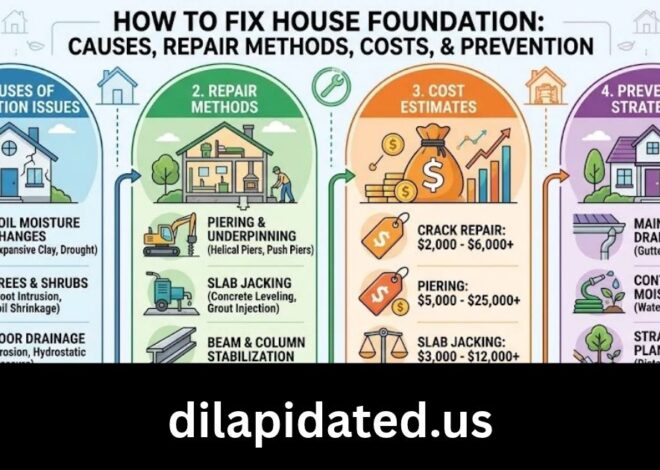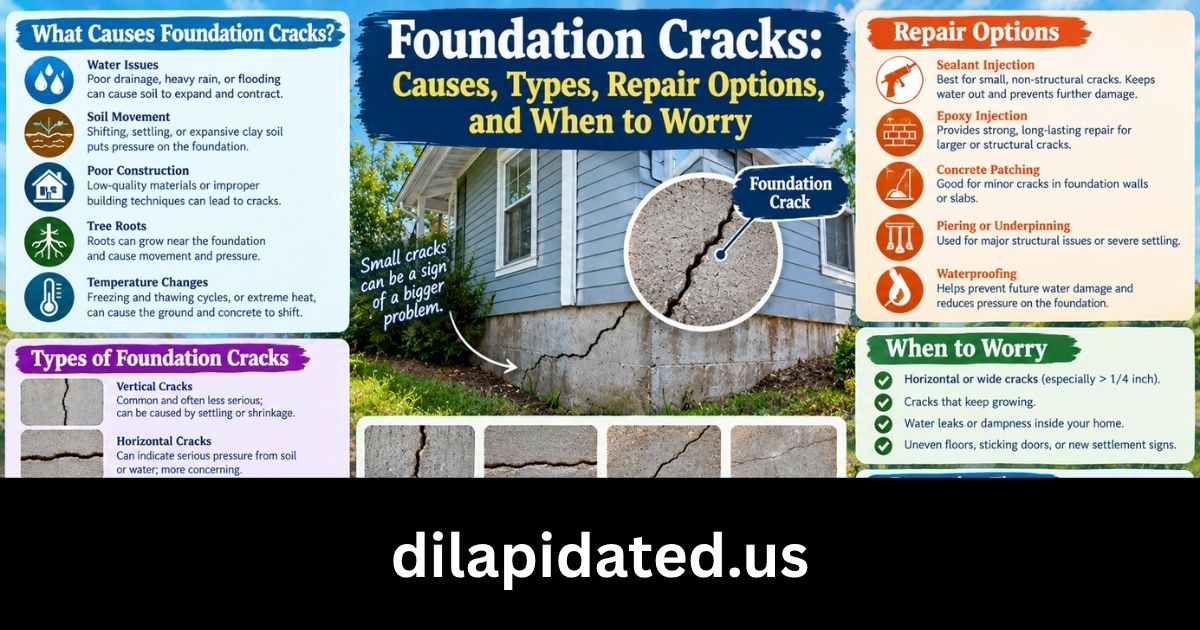
Foundation Cracks: Causes, Types, Repair Options, and When to Worry
Table of Contents
Foundation cracks are a common concern for homeowners, especially in properties exposed to changing soil conditions, moisture, temperature changes, or natural settling. Some cracks are minor and mainly cosmetic, while others can indicate water intrusion, soil movement, or structural problems that require professional attention.
Understanding the type, location, size, and progression of a foundation crack can help you decide what to do next. This guide explains common causes of foundation cracks, the different types you may encounter, available repair methods, and warning signs that should not be ignored.
What Are Foundation Cracks?
Foundation cracks are openings or fractures that develop in concrete, poured concrete, concrete blocks, or other foundation materials. They can appear inside basements, crawl spaces, garages, or on exterior foundation walls.
Not every foundation crack means a house is experiencing serious structural damage. Concrete naturally shrinks as it cures, and buildings can experience minor movement as they settle. However, cracks that become wider, extend through walls, allow water inside, or appear alongside other structural symptoms deserve closer attention.
The key is to identify whether the crack is stable and superficial or associated with ongoing movement.
Common Causes of Foundation Cracks
Normal Concrete Shrinkage
One of the simplest causes of foundation cracks is concrete shrinkage. As freshly poured concrete loses moisture and cures, it can contract slightly. This may create thin cracks, particularly in newer foundations.
Small, stable cracks caused by normal shrinkage are often not a major structural concern. Nevertheless, they should be monitored to make sure they do not become wider or develop other symptoms.
Soil Movement
Soil surrounding a home can expand, contract, shift, or settle depending on moisture levels and soil composition. Expansive soils may swell after heavy rainfall and shrink during dry periods.
Repeated soil movement can place pressure on foundation walls and contribute to cracking. In areas with unstable or highly expansive soil, professional evaluation may be useful when cracks continue to develop.
Poor Drainage and Water Pressure
Water is one of the most important factors affecting foundations. Poor grading, clogged gutters, leaking downspouts, or inadequate drainage can allow water to accumulate around foundation walls.
Saturated soil can exert additional pressure against the foundation. Over time, this may contribute to cracks, leaks, or other forms of damage.
Foundation Settlement
A building may settle slightly after construction. Minor settlement is often normal, but uneven or excessive settlement can create cracks in foundation walls, floors, drywall, doors, and other parts of the house.
Settlement-related cracking may become more concerning when cracks are widening or accompanied by noticeable changes elsewhere in the structure.
Temperature Changes
Concrete and other building materials expand and contract as temperatures change. Seasonal movement can contribute to small cracks, particularly when combined with other stresses.
Temperature-related cracks are not automatically dangerous, but their size and progression should be considered alongside other conditions.
Types of Foundation Cracks
Vertical Foundation Cracks
Vertical cracks generally run up and down along a foundation wall. Thin vertical cracks can sometimes result from concrete shrinkage or minor settlement.
A relatively narrow, stable vertical crack may be less concerning than a large crack that continues to widen. If the crack is growing, leaking water, or accompanied by other signs of movement, an inspection can help determine its cause.
Horizontal Foundation Cracks
Horizontal cracks can be more concerning because they may indicate pressure against the foundation wall. Soil pressure, hydrostatic pressure, or structural movement can contribute to horizontal cracking.
A horizontal crack should not automatically be assumed to mean catastrophic structural failure, but it deserves careful evaluation, particularly when the wall is bowing, leaning, or showing other signs of distress.
Stair-Step Cracks
Stair-step cracks commonly appear in masonry or concrete block foundations. They follow the mortar joints in a pattern resembling steps.
These cracks can be associated with differential settlement or movement. Their significance depends on their location, width, direction, and whether they are changing over time.
Diagonal Cracks
Diagonal foundation cracks can develop when different portions of a structure settle or move at different rates. The wider end of a crack may provide clues about the direction of movement, but determining the actual cause generally requires examining the entire structure.
Cracks in Foundation Floors
Cracks can also occur in concrete basement or garage floors. Some are related to normal concrete shrinkage, while others can be associated with soil movement or moisture conditions beneath the slab.
Floor cracks become more noteworthy when they are wide, uneven, repeatedly expanding, or accompanied by water intrusion or significant changes in the surrounding structure.
When Is a Foundation Crack Serious?
The appearance of a crack alone does not provide enough information to determine whether a foundation has structural damage. However, certain warning signs deserve professional attention.
Be particularly cautious when you notice:
- Cracks that are becoming wider or longer
- Large horizontal cracks in foundation walls
- Walls that appear bowed, leaning, or displaced
- Significant water entering through a foundation crack
- Doors or windows that suddenly become difficult to open
- Uneven or sloping floors
- Multiple new cracks appearing in different areas
- Cracks extending through several building materials
- Gaps developing around doors, windows, walls, or ceilings
A crack that changes over time is generally more important than one that remains unchanged for years.
How to Monitor Foundation Cracks
Monitoring a crack can provide useful information about whether it is stable or changing. Start by documenting its location and approximate width.
Take clear photographs with a date attached and periodically compare them. You can also use a simple crack-monitoring gauge or carefully record measurements with an appropriate ruler.
Monitoring does not replace a professional structural evaluation when serious warning signs are present. It is mainly useful for documenting changes over time.
Foundation Crack Repair Options
Epoxy Injection
Epoxy injection can be used for certain cracks in poured concrete. The material penetrates the crack and can bond the concrete together.
This method may be suitable for specific structural cracks, but proper surface preparation and application are important. It is not an appropriate solution for every type of foundation movement.
Polyurethane Injection
Polyurethane materials are commonly used to seal some foundation cracks against water intrusion. They can remain somewhat flexible, allowing them to accommodate limited movement.
This approach is particularly useful when the main objective is waterproofing, although the appropriate repair depends on the cause and condition of the crack.
Exterior Waterproofing
If water is entering through foundation walls, exterior waterproofing may be considered. This can involve excavation, sealing the foundation wall, improving drainage, and installing appropriate waterproofing materials.
Because exterior work can involve significant excavation, it is usually best planned after determining the source of the moisture problem.
Drainage Improvements
Sometimes the most important foundation repair is actually improving water management around the home. Cleaning gutters, extending downspouts away from the foundation, correcting grading, and improving drainage can reduce water accumulation.
Addressing the source of moisture can help prevent recurring foundation problems.
Structural Foundation Repair
If cracking is caused by significant movement, settlement, or wall displacement, specialized structural repairs may be necessary. Depending on the situation, solutions can include underpinning, stabilization systems, reinforcement, or other engineered repairs.
The correct method depends on soil conditions, foundation construction, the cause of movement, and the extent of damage.
Can You Repair Foundation Cracks Yourself?
Very small, stable cracks may sometimes be sealed by a homeowner using appropriate repair products. DIY repairs can be reasonable for minor cosmetic cracks when there are no signs of structural movement or water problems.
However, attempting to cover a serious crack without identifying its cause can hide evidence of an ongoing problem. Large, horizontal, expanding, leaking, or structurally associated cracks should be evaluated before choosing a repair method.
How Much Does Foundation Crack Repair Cost?
Foundation crack repair costs vary significantly depending on the crack type, location, cause, repair method, accessibility, local labor rates, and extent of damage.
A small crack that only requires sealing may cost considerably less than a repair involving excavation, drainage work, structural stabilization, or foundation underpinning.
Rather than choosing a repair based only on price, homeowners should first determine why the crack developed. Fixing the underlying cause can be more important than simply filling the visible opening.
How to Prevent Foundation Cracks
You cannot prevent every foundation crack, but good maintenance can reduce some common risks.
Keep gutters clean and make sure downspouts direct water away from the foundation. Maintain proper grading so rainwater flows away from the house rather than collecting next to foundation walls.
Avoid allowing soil around the foundation to become excessively dry or saturated when local conditions make this a concern. Regularly inspect exterior walls, basement areas, crawl spaces, and drainage systems for changes.
Early attention to leaks and drainage problems can also help limit moisture-related foundation issues.
Frequently Asked Questions About Foundation Cracks
Are small foundation cracks normal?
Some small cracks can result from concrete shrinkage or normal settlement. Their significance depends on factors such as width, location, direction, and whether they change over time.
Should I worry about a vertical foundation crack?
Not necessarily. Thin vertical cracks can have relatively minor causes, but a vertical crack that grows, becomes wide, leaks, or appears with other structural symptoms should be evaluated.
Are horizontal foundation cracks dangerous?
Horizontal cracks can be associated with pressure against a foundation wall and deserve careful attention. If the wall is bowing or the crack is widening, professional evaluation is especially important.
Can foundation cracks be repaired?
Yes, many foundation cracks can be repaired or sealed. The correct repair depends on the cause, crack type, location, moisture conditions, and whether the foundation is moving.
Do foundation cracks always mean structural damage?
No. Concrete shrinkage, minor settlement, and other non-structural factors can cause cracks. A professional assessment may be necessary when the crack is large, changing, leaking, or accompanied by other structural signs.
Can water come through foundation cracks?
Yes. Hydrostatic pressure and moisture around the foundation can force water through cracks. Drainage improvements and appropriate crack sealing or waterproofing may help address the problem.
Should I fill a foundation crack myself?
Minor, stable cracks may sometimes be sealed as a DIY project. However, it is better to investigate larger or changing cracks before repairing them so that an underlying problem is not concealed.
Conclusion
Foundation cracks range from minor concrete shrinkage cracks to signs of more significant soil movement, water pressure, or settlement. The most important factors are the crack’s size, direction, location, progression, and associated symptoms.
Regular inspections, good drainage, proper gutter maintenance, and early attention to changes can help protect a home’s foundation. When a crack is expanding, horizontal, leaking, associated with wall movement, or accompanied by other structural changes, getting a qualified professional to evaluate the situation is a sensible next step.
Understanding foundation cracks does not mean assuming the worst. It means recognizing potential warning signs early and choosing repairs based on the actual cause rather than simply covering up the visible crack.