Foundation Damage: Causes, Warning Signs, Repair Options, and Prevention
Table of Contents
Foundation damage is one of the most important problems a homeowner can identify early. A home’s foundation supports the entire structure, so issues such as cracks, uneven floors, water intrusion, or shifting walls should not be ignored. While some small cracks are harmless, others can indicate movement, drainage problems, soil changes, or structural deterioration.
Understanding the common causes and warning signs of foundation damage can help homeowners decide when simple maintenance is enough and when professional inspection is necessary. This guide explains foundation damage, what causes it, how to recognize serious problems, common repair methods, and ways to protect your home.
What Is Foundation Damage?
Foundation damage occurs when the base of a house develops structural or moisture-related problems that affect its ability to support the building properly. Foundations can be constructed from poured concrete, concrete blocks, brick, stone, or other materials, and each type can develop different issues over time.
Foundation problems do not always mean that a house is in immediate danger. Some cracks develop naturally as concrete cures and settles. However, widening cracks, significant movement, water infiltration, or changes in the shape of walls can indicate a more serious issue.
The key is identifying the cause rather than simply covering up visible damage.
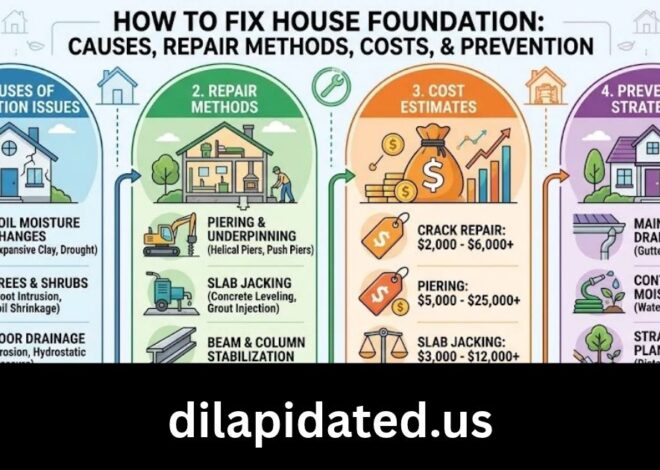
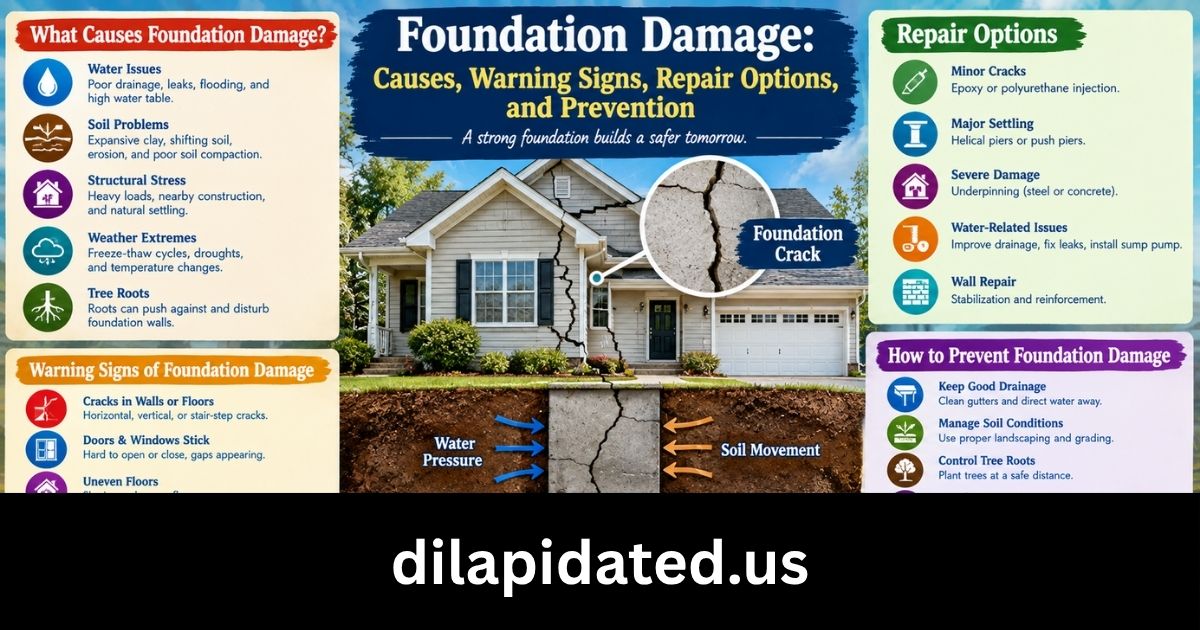
Common Causes of Foundation Damage
Several environmental, structural, and maintenance-related factors can contribute to foundation problems.
Soil Movement
Soil is one of the biggest factors affecting a foundation. Expansive clay soil can absorb water and swell, then shrink as it dries. Repeated expansion and contraction can put pressure on foundation walls and cause movement.
Loose or poorly compacted soil can also settle beneath a home. When different areas settle at different rates, the foundation may become uneven.
Poor Drainage
Water that collects around a home’s foundation can create significant problems. Gutters, downspouts, and grading all influence where rainwater flows.
If water consistently drains toward the foundation, it can saturate surrounding soil, increase pressure against foundation walls, and contribute to cracking or settlement.
Plumbing Leaks
Underground plumbing leaks can introduce large amounts of water into the soil beneath or beside a foundation. Over time, this can wash away soil or cause changes in soil conditions.
A sudden increase in water bills, damp areas, unexplained moisture, or localized foundation movement can sometimes point to a hidden plumbing problem.
Poor Construction
Foundation problems can sometimes originate foundation damage during construction. Insufficient reinforcement, improper concrete installation, inadequate drainage systems, or poorly compacted soil may reduce long-term foundation performance.
Construction defects may not become obvious until years after a house is built.
Natural Settlement
Some degree of settlement can occur as a new structure adjusts to its surroundings. Minor settlement is not necessarily a major concern.
The important distinction is whether movement is stable or continuing. Progressive settlement can cause doors and windows to stick, floors to slope, and cracks to become larger.
Signs of Foundation Damage
Knowing what to look for can help homeowners identify problems before they become more expensive.
Cracks in Foundation Walls
Cracks are among the most visible warning signs. Small, narrow cracks can sometimes result from normal concrete shrinkage. However, large, growing, horizontal, or stair-step foundation damage cracks may deserve professional attention.
The location, direction, width, and progression of a crack are all important when determining its significance.
Cracks Around Doors and Windows
Foundation movement can place stress on walls above the foundation. As a result, homeowners may notice cracks around door frames, windows, corners, or other openings.
These cracks should be monitored, particularly if they appear alongside other signs of movement.
Uneven or Sloping Floors
A floor that feels noticeably uneven can be associated with settlement, structural movement, or problems with the supporting soil. Not every uneven floor is caused by foundation damage, but a sudden or progressively worsening slope should be investigated.
Doors and Windows That Stick
Doors that suddenly become difficult to open or windows that no longer close properly can indicate changes in the building’s alignment.
Humidity and seasonal changes can also affect doors and windows, so this sign is more meaningful when it appears together with cracks or other structural symptoms.
Water in the Basement or Crawl Space
Persistent moisture, puddles, damp walls, mold growth, or water stains can indicate drainage or waterproofing problems.
Water intrusion does not always mean the foundation itself is structurally failing, but ongoing moisture can damage materials and contribute to long-term problems.
Types of Foundation Cracks
Not every foundation crack has the same meaning.
Vertical Cracks
Vertical cracks are relatively common in concrete foundations. Narrow vertical cracks may result from concrete shrinkage or minor settlement. Nevertheless, a crack should be monitored for changes in width, length, and moisture.
Horizontal Cracks
Horizontal cracks in foundation walls can be more concerning because they may be associated with lateral soil pressure. Heavy saturated soil outside a foundation wall can push inward and place substantial stress on the wall.
A significant horizontal crack should be professionally evaluated.
Stair-Step Cracks
Stair-step cracks commonly appear in masonry or concrete-block walls and follow the mortar joints in a stepped pattern. They can be associated with differential settlement or other forms of movement.
The severity depends on the size, location, and progression of the crack.
How Foundation Damage Is Diagnosed
A professional foundation inspection typically involves examining both the structure and the conditions surrounding it.
An inspector or structural professional may look at foundation walls, floors, exterior grading, drainage, cracks, doors, windows, crawl spaces, and other parts of the building.
Measurements can also help determine whether movement is occurring. In some situations, additional evaluation may be needed to identify soil conditions or plumbing leaks.
A proper diagnosis is important because the foundation damage correct repair depends on the underlying cause. Sealing a crack without addressing ongoing water pressure or soil movement may only provide a temporary solution.
Foundation Damage Repair Options
The appropriate repair method depends on the type and severity of the problem.
Crack Repair
Small, stable cracks may sometimes be repaired using appropriate concrete or masonry repair products. For cracks that allow water to enter, specialized waterproofing or injection systems may be used.
The repair should address the reason the crack developed whenever possible.
Drainage Improvements
Improving drainage can reduce water-related foundation problems. Solutions may include extending downspouts away from the house, correcting grading, improving foundation damage surface drainage, or installing suitable drainage systems.
Keeping rainwater away from the foundation is one of the most practical forms of preventative maintenance.
Waterproofing
For homes experiencing recurring basement or crawl-space moisture, waterproofing may involve exterior drainage, membranes, interior drainage systems, sump pumps, or other solutions.
The best approach depends on where the water originates and how it enters the building.
Foundation Underpinning
When a foundation has experienced significant settlement, specialized underpinning systems may be considered. These systems are designed to transfer structural loads to stronger soil or deeper supporting layers.
Underpinning is a major repair and should be designed and installed by qualified professionals.
Wall Reinforcement
Foundation walls affected by lateral pressure may require reinforcement. Depending on the structure, solutions can include engineered braces, reinforcement foundation damage systems, or other structural repairs.
Because structural conditions vary considerably, professional assessment is especially important before selecting a repair method.
Foundation Damage vs. Normal Foundation Cracks
One of the biggest mistakes homeowners make is assuming every crack means serious foundation failure. Concrete naturally shrinks as it cures, and minor cracks can develop without creating a major structural problem.
On the other hand, rapidly growing cracks, substantial displacement, horizontal wall cracks, major water intrusion, or noticeable structural movement deserve closer attention.
Instead of judging a foundation problem from a single crack, look at the overall pattern and whether the condition is changing over time.
How to Prevent Foundation Damage
Preventative maintenance can reduce the risk of expensive foundation repairs.
Maintain Gutters and Downspouts
Keep gutters clear and make sure downspouts direct water away from the foundation. Regularly check for leaks, blockages, and disconnected sections.
Monitor Soil Moisture
Avoid allowing soil immediately around the foundation to become extremely dry and then heavily saturated whenever possible. Landscaping and irrigation should be managed so water does not repeatedly collect beside foundation walls.
Maintain Proper Grading
The ground around a home should generally direct surface water away from the structure. Low spots near foundation walls can allow rainwater to accumulate.
Inspect Regularly
Walk around the exterior and interior of your home periodically. Look for new cracks, changes in existing cracks, water stains, uneven floors, and drainage problems.
Keeping photographs and notes can help you determine whether a crack is changing over time.
When Should You Call a Professional?
Professional evaluation is appropriate when foundation symptoms are significant, worsening, or difficult to explain.
Consider getting an inspection if you notice large or expanding cracks, horizontal foundation-wall cracks, significant water intrusion, substantial floor movement, major wall displacement, or several symptoms occurring at the same time.
A structural engineer or qualified foundation professional can help determine whether the issue is cosmetic, related to drainage, caused by settlement, or requires structural repair.
Avoid choosing a repair method solely because it is advertised as a universal solution. Foundation problems have different causes, and the repair should match the actual condition.
Frequently Asked Questions
1. What is the most common cause of foundation damage?
Soil movement and water-related conditions are common contributors. Expansive soils, settlement, poor drainage, and changes in soil moisture can all place stress on a foundation.
2. Are small foundation cracks normal?
Some narrow cracks can occur as concrete cures and shrinks. However, cracks should be monitored, especially if they grow, allow water through, or appear with other signs of structural movement.
3. Can foundation damage be repaired?
Many foundation problems can be repaired, but the appropriate solution depends on the cause and severity. Repairs can range from drainage improvements and crack sealing to structural reinforcement or underpinning.
4. Does water cause foundation problems?
Water can contribute to foundation problems by saturating soil, increasing pressure against walls, causing erosion, or entering through cracks and joints. Good drainage is therefore an important part of foundation maintenance.
5. How do I know if a foundation crack is serious?
A crack deserves closer professional evaluation when it is widening, displaced, horizontal, accompanied by water intrusion, or associated with sticking doors, uneven floors, or other structural changes.
6. Can gutters help prevent foundation damage?
Yes. Properly functioning gutters and downspouts can reduce the amount of rainwater collecting near the foundation. They are an important part of a home’s drainage system.
7. How much does foundation repair cost?
Foundation repair costs vary considerably depending on the problem, property size, location, materials, accessibility, and repair method. A professional inspection and written estimate are more reliable than a general price estimate.
Conclusion
Foundation damage can range from minor cracks to significant structural problems, and recognizing the difference is essential for responsible home maintenance. Soil movement, poor drainage, water intrusion, plumbing leaks, settlement, and construction issues can all affect a foundation.
Regular inspections, effective drainage, properly maintained gutters, and early attention to changing cracks can help protect a home. When serious warning foundation damage signs appear, professional evaluation can identify the underlying cause and determine the appropriate repair strategy.
A foundation is one of the most important components of any house. Taking small problems seriously—and addressing their causes rather than simply foundation damage hiding the symptoms—can help preserve the safety, stability, and long-term value of the property.